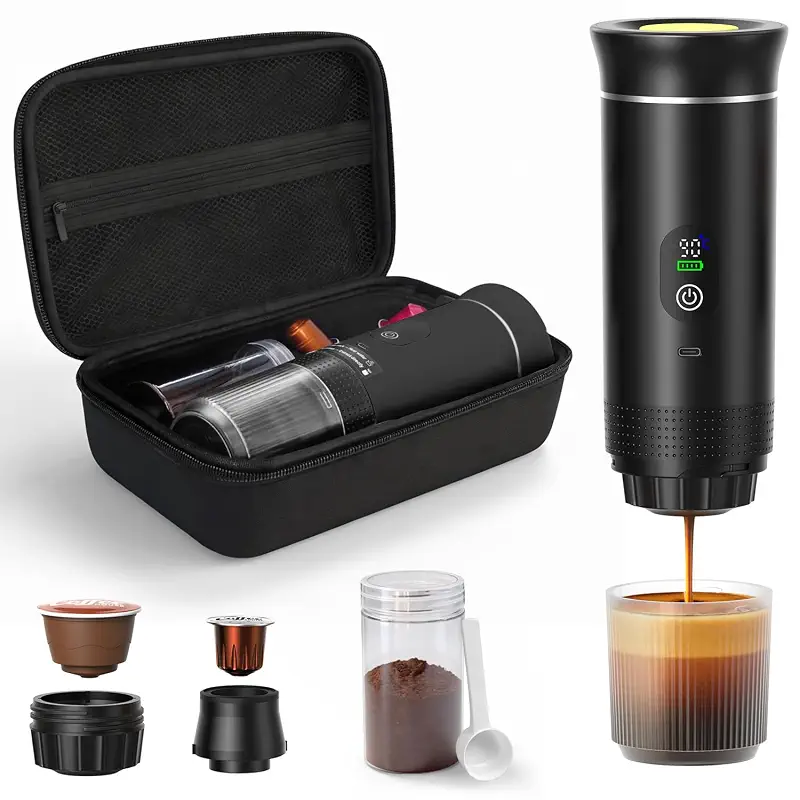
Best Battery Operated Coffee Maker for Travel & Camping
Find the best battery operated coffee maker for camping, RVs, and travel. Compare portable espresso makers, K-cup brewers, and cordless options with expert reviews.
Ideal for: Coffee enthusiasts who want espresso capability and multiple brewing formats in a lightweight, travel-ready package.
The Swiitaey stands out for its ability to handle ground coffee, plus both large and small capsules (NS and DG formats), giving you flexibility if your travel plans cross different coffee ecosystems. The 7500mAh battery is generous for a 1.5-pound unit, supporting up to four full brewing cycles or fifty extractions on a single charge. The 20-bar pressure system and built-in temperature display appeal to anyone who wants café-level control while mobile.
Owners consistently praise the build quality and the speed of the USB-C recharge cycle. The stainless steel body and overall fit-and-finish justify the premium-tier positioning in this category. One reviewer noted the quiet operation compared to other portable units. That said, real-world espresso quality depends heavily on technique and grind consistency, and several owners report weak extraction or uneven water flow through the grounds, which undermines the espresso promise unless you're willing to experiment with tamping and dosing.
Compared to the BougeRV's straightforward drip approach, the Swiitaey demands more attention to dial in good results, but rewards that effort with more brewing flexibility and the potential for richer flavor if you nail the technique. Skip this if you're not interested in learning espresso basics; pick it if you want the widest brewing options and don't mind a learning curve.
Pros
Flexible 3-in-1 brewing with ground coffee and two capsule formats
7500mAh battery supports 4+ full brewing cycles per charge
Compact at 1.5 lbs with premium stainless steel and ABS construction
20-bar pressure system and temperature display for control
Cons
Uneven water distribution can lead to weak or over-extracted brews
Learning curve required to dial in espresso technique and grind
Key features
20-bar pressure espresso system with 197.6°F precision temperature display
Compatible with ground coffee, NS capsules, and DG capsule formats
7500mAh rechargeable battery, USB-C fast charging via car or wall adapter
Ultra-lightweight 1.5-pound stainless steel design for backpack travel
#2 Pick
Best for K-Cup & Ground Coffee Variety
BougeRV
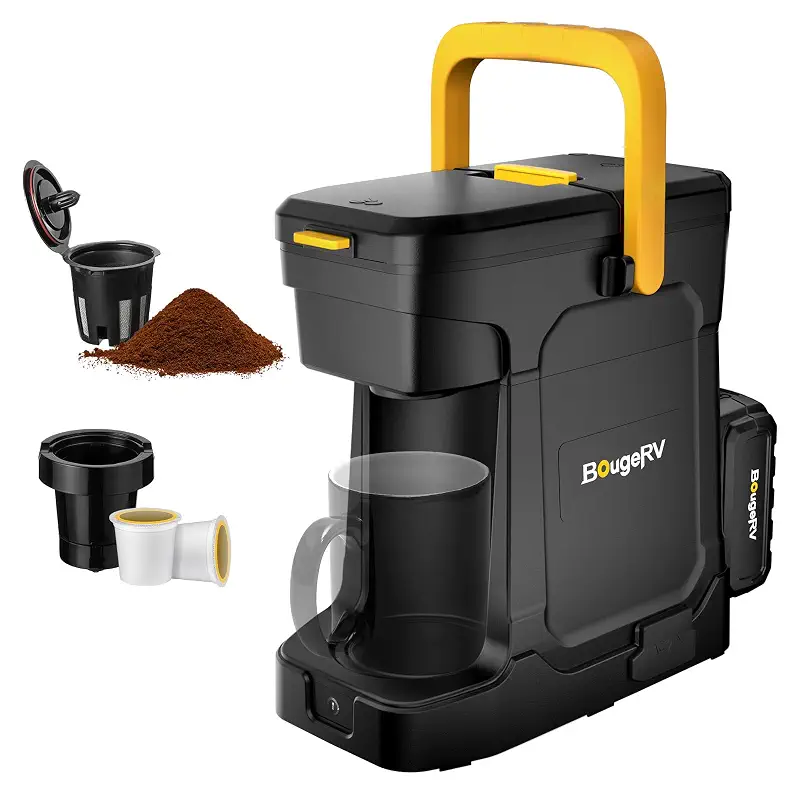
BougeRV 144Wh Portable Coffee Maker Compatible with K Cup & Ground Coffee | Portable Coffee Machine Cordless with 18V 8Ah Battery Powered AC/DC Power for Travel, Camping, Outdoor, Jobsite, RV, Home
4.1(35)
Larger-capacity brewer with removable battery and AC/DC flexibility, ideal for group camping and RV use despite slower brewing.
Ideal for: Families, couples, and groups who want multiple cups per charge and the convenience of AC or battery power.
The BougeRV delivers more cups per charge than most rivals in this roundup, brewing five to six full eight-ounce servings from its 8Ah/ removable battery. The dual-power design is practical: use the battery for true cordless freedom outdoors, or plug into AC when you're parked and have power access. That flexibility makes this the strongest choice if you're splitting coffee duties with a partner or small group during extended trips.
K-Cup compatibility is a major asset for buyers already invested in that pod ecosystem. The machine also accepts ground coffee, and owners confirm it produces a hot, well-flavored cup in six to eight minutes. The compact footprint and integrated carry handle appeal to RV and truck users. One drawback: the battery takes several hours to recharge, and the brewing process itself is notably slower than some electric-only machines. A couple of reviews flag the coffee temperature running slightly cooler than expected, which might matter if you prefer espresso-level heat.
Where the Swiitaey leans espresso-forward and the Senix offers cordless water heating, the BougeRV prioritizes volume and pod diversity. If you're camping with others or need the option to stay plugged in at your home base, this outperforms the single-serve-focused options. For those exploring other styles, the best white coffee maker represents a different brewing tradition focused on lighter roasts and nuanced flavor profiles, but the BougeRV's strength remains straightforward K-Cup and ground coffee reliability. Skip it if you need speed or demand café-quality heat; pick it for pure practicality on group trips.
Pros
Brews 5–6 cups per 8Ah battery charge, the highest in this lineup
K-Cup and ground coffee compatibility for maximum pod ecosystem flexibility
Removable battery allows AC/DC hybrid operation and battery swaps
Compact design with integrated handle fits car cup holders and backpack storage
Cons
Slower brewing speed (6–8 minutes) compared to electric-only rivals
Coffee temperature runs slightly cooler than traditional drip makers
Key features
Removable 8Ah/ battery for 5–6 cups per full charge
K-Cup and ground coffee compatible with fast 6–8 minute brew cycle
Dual AC/DC power option: cordless battery or plugged-in continuous brewing
Compact 26.6 × 14.7 cm footprint with integrated carry handle and wide cup fit
#3 Pick
Best Cordless Water Heater
Senix
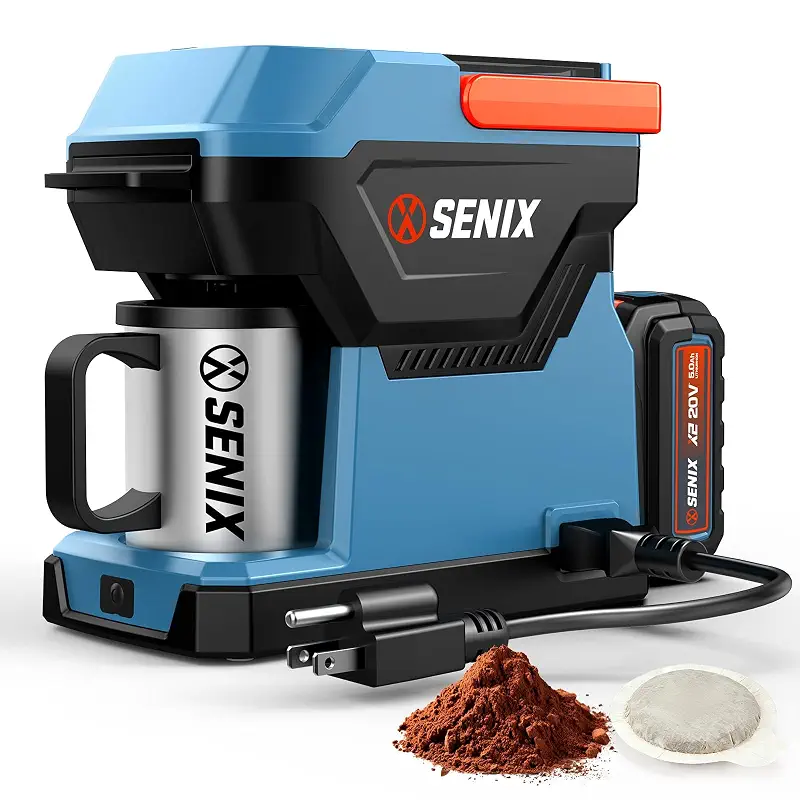
SENIX Portable Coffee Maker with 5000mAh Battery, Dual AC/DC Electric Coffee Machine for Car/RV/Camping, Cordless Outdoor Travel Brewer Compatible with Ground & ESE Pods, Included Cup
4.5(2)
Unique hot-water brewing system with battery and dual AC/DC power, offering flexibility for remote locations without pre-heated water.
Ideal for: Campers and outdoor enthusiasts in remote areas who need hot water heating and value balanced drip-style coffee flavor.
The Senix solves a real problem that many portable brewers sidestep: it heats cold water to 208–212°F without requiring a kettle or pre-boiled supply. For hikers who arrive at camp with creek water or car-travelers without shore power, that capability is transformative. The battery brews up to four cups cordlessly, and the dual AC/DC design mirrors the BougeRV's hybrid approach, letting you plug in at a cabin or stay battery-powered on the road.
The brew method is pour-over style drip, which appeals to grounds-and-ESE-pod users who prioritize clean, balanced flavor over high pressure or espresso crema. The all-in-one kit includes a double-walled stainless mug, scoop, and permanent filter, eliminating the need to hunt for accessories. One-touch operation keeps the user experience simple, and the 3–5 minute brew window on AC (or 6–8 minutes on battery) is competitive. The product description emphasizes the integrated handle and car-cup-holder fit, suggesting solid design for mobile use.
Review volume for the Senix is limited (two five-star ratings), so long-term durability patterns aren't yet clear. Compared to the Makita's tool-focused durability and the Swiitaey's espresso ambition, the Senix occupies a middle ground: it's ideal if you want cordless water heating without the learning curve of pressure-based brewing. Pick this if you camp in locations where hot water is unavailable; skip it if you already have reliable access to boiled water or prefer K-Cup convenience.
Pros
Built-in water heater reaches 208–212°F without external kettle or stove
battery powers up to 4 cordless brews with AC/DC hybrid option
ESE pods and ground coffee compatible with pour-over drip extraction
Complete travel kit includes insulated mug, scoop, and permanent filter
Cons
Limited real-world review data available for reliability assessment
Brew time slightly longer than electric-outlet-dependent machines
Key features
Built-in heating element warms cold water to 208–212°F cordlessly
battery brews 4 cups with AC/DC dual-power hybrid design
Pour-over drip style compatible with ground coffee and ESE pods
Ideal for: Tradespeople and field professionals who own Makita 18V LXT batteries and prioritize durability and jobsite practicality.
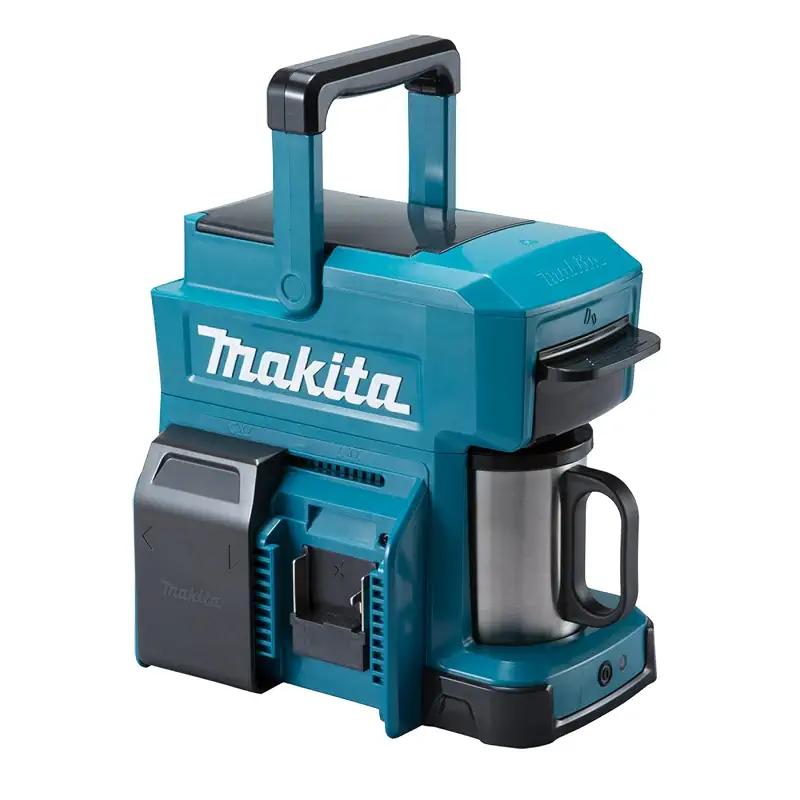
If you're already invested in the Makita ecosystem, the 18V LXT coffee maker becomes a no-brainer: it's engineered to the same durability standard as Makita drills and saws, and it leverages batteries you likely already own and charge regularly. Three five-ounce cups from a single 5.0Ah charge is respectable, and the five-minute brew window is among the fastest in this group. Field workers and tradespeople consistently praise the build quality and the freedom from site coffee runs.
The device accepts ground coffee or single-serve packs (the "Baronet" sachets mentioned by reviewers are popular in construction and industrial contexts), and the no-paper-filter permanent drip basket reduces cleanup friction in dusty or remote jobsites. One reviewer noted using it for instant coffee and hot water, showing flexibility beyond traditional brewing. The compact eight-inch height means it fits tight van and truck spaces. The primary catch is upfront cost: if you don't already own Makita batteries and a charger, the entry price becomes steep. Even with existing Makita infrastructure, a 5Ah battery drains faster than users expect if they make multiple cups or run other tools daily.
Compared to the BougeRV's broader battery ecosystem flexibility and the cordless coffee maker setup guide resources available online, the Makita locks you into a proprietary platform. But if you're a carpenter, electrician, or landscaper running Makita tools daily, the durability and ecosystem advantage justify the premium. Skip this if you don't have Makita batteries; pick it if you do and want industrial reliability.
Pros
Industrial-grade Makita build quality and compatibility with existing 18V LXT batteries
Three 5-ounce cups per 5.0Ah charge with fast 5-minute brew time
No paper filters needed, permanent drip basket simplifies field cleanup
Compact 8.5-inch height fits tight van and truck storage spaces
Cons
High cost if you don't already own Makita batteries and charger infrastructure
5.0Ah battery depletes faster with multiple daily brews or concurrent tool use
Key features
Compatible with Makita 18V LXT and 12V max CXT lithium-ion batteries (sold separately)
Brews 3 full 5-ounce cups per 5.0Ah charge in 5-minute cycles
Permanent stainless drip filter accepts ground coffee or single-serve packs
Compact 8.5-inch height with 3.5-inch cup clearance for truck and van use
#5 Pick
Most Versatile Multi-Tool Brewer
Byutrcfuy
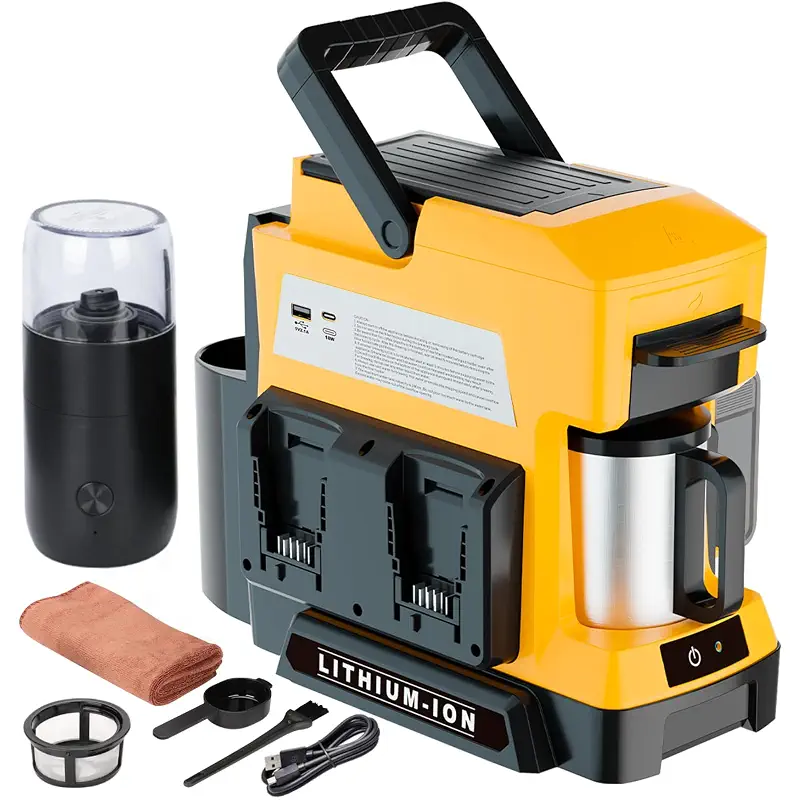
Cordless Coffee Maker for Dewalt 20V MAX Battery, 3 Brewing Options Drip Coffee Maker with Coffee Grinder, Portable Single Serve Coffee Makers for Camping, Travel, and Jobsite. (Tool Only)
4.4(24)
DeWalt 20V-compatible maker with three brewing modes, integrated grinder, and USB charging ports, offering the broadest feature set for varied use.
Ideal for: DeWalt battery owners who want fresh-ground coffee, multiple brewing options, and USB charging capability in a portable package.
The Byutrcfuy stands apart by bundling a cordless grinder, three brewing methods (ground, ESE pods, and pre-ground bags), and dual USB charging outputs into one compact unit. For travelers who want fresh-ground beans without a separate grinder, or who need to top up a phone while brewing, this delivers genuine convenience. The 400W heating system reaches 195–205°F and brews eight ounces in minutes, making it competitive on speed. The reusable metal filter reduces paper waste on extended trips.
DeWalt 20V MAX battery compatibility opens the maker to a different tool ecosystem than the Makita, and you can chain up to four batteries for multiple-cup brewing. The automatic shut-off at low voltage protects both battery and user. Real-world reviews flag a critical usability issue: the grinder and water measurement require precise technique, and overshooting either one quickly leads to grounds in the cup or weak coffee. One owner spent several attempts dialing in the right grind and water ratio before achieving consistent results. Another found the battery drain steeper than expected for multi-cup sessions.
Where the Makita focuses on durability for field professionals and the BougeRV prioritizes group-friendly cup volume, the Byutrcfuy tries to do everything, which means each feature carries trade-offs. The integrated grinder is a plus if you value fresh beans, but it also means more to clean and calibrate. Pick this if you own DeWalt batteries, want integrated grinding, and don't mind a setup learning curve; skip it if you prefer simplicity or already have a separate grinder.
Pros
Integrated cordless grinder for fresh-ground beans with three brewing formats
Dual USB-A and USB-C outputs charge phones and devices while brewing
400W heating delivers 195–205°F in minutes with automatic safety shut-off
DeWalt 20V MAX battery compatible, supports up to four batteries for extended use
Cons
Precise grind and water measurement required; poor technique leads to grounds in cup
4Ah battery produces only 2–3 cups, requiring multiple batteries for group trips
Key features
Separate rechargeable grinder with three brewing modes: fresh grounds, pods, bags
400W heating system reaches 195–205°F with reusable metal coffee filter
DeWalt 20V MAX compatible with support for up to 4 batteries per session
Dual USB outputs (5V 2.1A USB-A, 18W USB-C PD) for phone and device charging
How to Choose the Right Battery Coffee Maker
Four trade-offs that actually matter when matching a battery operated coffee maker to your kitchen.
Battery Ecosystem & Compatibility
Before comparing brewing methods, lock in your battery platform. The Makita runs off 18V LXT; the Byutrcfuy needs DeWalt 20V MAX; the Swiitaey, BougeRV, and Senix carry proprietary or removable packs. If you already own a tool brand and rotate batteries daily, choose the matching coffee maker and leverage your existing charger. If you don't own a power-tool ecosystem, the self-contained models (Swiitaey, BougeRV, Senix) eliminate compatibility headaches. A cordless coffee maker setup guide will walk you through pairing batteries and charging schedules for your specific unit.
Brewing Style & Flavor Profile
Three brewing methods dominate this category: espresso-pressure (Swiitaey), drip coffee (BougeRV, Senix, Makita), and hybrid (Byutrcfuy with ground/pod flexibility). Espresso machines deliver concentrated shots and crema but demand grind precision and technique. Drip brewers produce balanced, clean cups without fussing. If you prioritize ease and consistency, drip wins. If you want café-level richness and don't mind a learning curve, espresso or high-pressure systems shine. The Byutrcfuy's built-in grinder bridges the gap but adds setup complexity. Match your flavor preference and patience level to the method.
Cup Volume & Battery Capacity
How many people are you brewing for, and how often do you need to recharge? The BougeRV tops the list at five to six cups per charge, ideal for couples or small groups. Single-cup machines (Makita, Byutrcfuy, Swiitaey) suit solo travelers or commuters. The Senix lands in the middle at four cups. If you're camping for multiple days without shore power, higher-capacity batteries and AC/DC hybrid options (BougeRV, Senix, Byutrcfuy) let you plug in when possible and conserve battery for remote hours. A battery runtime comparison guide will detail charge times and per-cup drain across models.
Portability & Weight Trade-offs
The Swiitaey wins at 1.5 pounds and five-inch height, making it ideal for ultralight backpacking or tight carry-on luggage. The Makita, Byutrcfuy, and Senix clock in at moderate weights suitable for car camping and jobsites. The BougeRV is heavier but still portable by RV and truck standards. Weigh your trips: day hikes and airline travel demand lightweight espresso or compact drip brewers; vehicle-based camping tolerates larger machines for higher volume. Also consider what fits your cup holders, van shelving, or backpack cubbies. A lighter machine doesn't help if it doesn't fit your van corner.
Total Cost of Ownership
The upfront machine price is only part of the equation. Makita and DeWalt models require investing in batteries and chargers if you don't already own them, which can double or triple the effective cost. Proprietary-battery machines (Swiitaey, BougeRV, Senix) bundle charging infrastructure but lock you to one maker. Consider your broader tool collection and how often you brew. If you rotate four cordless drills or saws daily, the coffee maker's battery drain is incremental; if it's your only cordless device, buying batteries just for coffee is a less efficient spend. Factor in filter costs (paper for drip machines, pods for K-Cup systems) and whether you can repair or replace parts long-term.
Frequently asked
Quick answers to the questions readers ask most.
Can I use my existing coffee maker batteries in a portable brewer?
Only if you buy the matching brand. Makita coffee makers pair with Makita 18V LXT batteries. DeWalt models use DeWalt 20V MAX packs. The Swiitaey, BougeRV, and Senix use built-in or proprietary removable batteries incompatible with tool platforms. Check your existing battery format before buying; if you don't own power tools, the self-contained models simplify your setup.
How long does a coffee maker battery last before it needs replacing?
Most rechargeable batteries hold capacity for 200–500 charge cycles (roughly 2–5 years with regular use). Lithium-ion cells degrade gradually, losing 10–20% capacity after two years. Proprietary batteries (Swiitaey, BougeRV) are harder to replace than tool-ecosystem packs (Makita, DeWalt), which you can buy from hardware stores. Plan for eventual battery replacement if you use your brewer several times per week.
Do cordless coffee makers work in cold weather or high altitude?
Battery performance drops in freezing temps, and water takes longer to heat. At high altitude, water boils at lower temperatures, weakening extraction. Most portable brewers target sea-level, room-temperature use. For cold camping or mountain trips above 8,000 feet, expect slower heating and potentially weaker flavor. Using pre-heated water (from a thermos or camp stove) mitigates cold-weather slowness.
Which portable brewer makes the hottest, strongest coffee?
The Swiitaey's 20-bar pressure system delivers the most force, but uneven water flow undermines real espresso quality. The Makita and BougeRV produce hot, well-extracted drip coffee at competitive temperatures. The Senix emphasizes balanced flavor over heat. None match a full-size electric brewer, but the Makita and BougeRV consistently deliver café-quality strength without the technique demands of pressure machines.
Can I brew directly into a travel mug, or do I need the included cup?
Most models fit standard travel mugs or camping cups up to five inches tall. The BougeRV explicitly supports mugs and cups up to 5.1 inches. Check your mug height and the machine's cup-clearance spec before buying. Some machines (Swiitaey, Byutrcfuy) are taller and may not fit under low-clearance travel lids, so verify dimensions if you're using a specific mug.