Kitchen & Dining · Small
Best Bar Mini Fridge: Top Picks for Home & Office
Find the best bar mini fridge for your space. Compare beverage coolers, built-in cabinet options, and compact models with expert reviews and buyer insights.
Affiliate disclosure: As an Amazon Associate I earn from qualifying purchases.
At a glance
1
Best All-in-One Furniture SolutionLuxoak
2
Best for Flexible Bar SetupOlabox
3
Best High-Capacity Beverage CoolerEuhomy
4
Best Budget 130-Can OptionElectactic
5
Best Compact FootprintAntarctic Star
Detailed reviews
This piece appeals to anyone who wants cooling capacity without compromising on furniture aesthetics. The built-in mini fridge hides away from view, adjusts from 41°F to 68°F, and keeps the overall design language that of a proper cabinet rather than an appliance. You get three adjustable shelves both inside the fridge compartment and throughout the rest of the unit, plus sturdy drawers rated for up to 44 pounds each, which makes it genuinely useful for storing glassware, bar tools, or anything else you need near your beverage station.
The trade-off is that this is furniture first, fridge second. The cooling compartment is tucked away, so you won't see your drinks at a glance like you would with a glass-door beverage cooler. Also, Luxoak notes in their setup guidance that the mini fridge may need several hours to reach temperature after assembly, and a full load can extend that further, so plan ahead if you're stocking it for an event.
Compared to the Euhomy and Electactic standalone models, this cabinet prioritizes living-room integration over pure drink visibility, making it the choice for people who want their bar to feel like part of the room rather than a dedicated appliance.
Pros
- Furniture-style design fits any room aesthetic
- Spacious drawers and shelves for glassware and bar tools
- Quiet operation, energy-efficient cooling system
Cons
- Slow initial cooling; full load extends temperature ramp-up time
- Hidden fridge compartment means no at-a-glance visibility of drinks
Key features (4)
- Built-in mini fridge with 41°F–68°F temperature range and adjustable shelves
- Chest-style cabinet with three adjustable shelves and reinforced support leg
- Metal drawer slides and sturdy construction rated for 44-pound shelf load
- Timeless design works in living rooms, apartments, and compact spaces
Olabox takes a different approach: they give you the cabinet framework and let you choose your own mini fridge model. The compartment measures 20"L × 19.7"W × 35"H, which fits most standard beverage coolers and 24-can models. This flexibility means you can pick a fridge that matches your exact cooling needs and budget, and later swap it for a different model without replacing the entire cabinet.
What pushes this toward serious bar setups is the built-in power station with two AC outlets and two USB ports, plus cable-management holes and ventilation openings in the back. If you're running a coffee bar, hosting game nights, or setting up a home office beverage station, having integrated charging for phones and tablets while your drinks chill makes this particularly practical. The 39-inch tabletop gives you space for a cocktail setup or coffee station on top.
Where this differs from the Luxoak is the added infrastructure for modern living. You're not just storing drinks; you're building a functional station. One buyer noted assembly was manageable solo, though the unit was stable once fully assembled. The modern fluted-door design and gold handles appeal to farmhouse and industrial aesthetics.
Pros
- Integrated power outlets and USB ports for device charging
- Flexible fridge compartment fits most standard beverage coolers
- 39-inch tabletop provides ample workspace for drinks or coffee setup
Cons
- Mini fridge must be purchased separately and sourced to fit compartment
- Requires adequate back clearance for proper ventilation
Key features (4)
- Spacious fridge compartment (20"L × 19.7"W × 35"H) fits most standard mini fridges
- Built-in power station with 2 AC outlets and 2 USB charging ports
- Fluted textured doors with wood grain top and gold hardware, adjustable shelf storage
- Five-leg reinforced base with anti-tipping device and cable-management holes
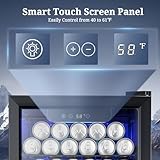
If you're serious about beverage storage and want everything visible through glass, this Euhomy model sets the standard in its class. The 3.2 cubic-foot capacity and 130-can rating make it genuinely spacious, and the five removable shelves let you arrange cans vertically, bottles horizontally, or mix sizes however you want. The digital touchscreen controls lock in any temperature between 37°F and 61°F with accuracy within ±2°F, according to owner testing, and the unit remembers your setting even after a power loss.
What owners consistently praise is the build quality and quiet running. At 36 decibels, it's noticeably quieter than some competitors, and the compressor-based cooling with air circulation ensures even temperature throughout. The UV-blocking double-pane glass door protects drink quality and reduces energy loss, while the reversible hinge and adjustable feet make it work in tight spaces or open rooms. One long-term owner noted it freed up substantial kitchen fridge space, which is the real win for household drink management.
Beyond the Electactic's similar capacity, this model benefits from a larger, more responsive user base; the 4,700-plus reviews reveal detailed experiences with defrost cycles, placement requirements, and long-term reliability. Euhomy's customer support reputation for ice makers translated into strong standing here as well. You do need to let it stand upright for 24 hours before first use, and placement away from heat sources matters for optimal performance.
Pros
- Holds up to 130 cans with five adjustable shelves for flexible organization
- Quiet compressor operation at 36 dB, energy-efficient at 0.69 kWh per day
- Precise digital temperature control (37°F–61°F) with automatic defrost cycle
Cons
- Requires 24-hour upright resting before first use to allow refrigerant to settle
- Not designed for perishable foods; limited to beverages and non-food items
Key features (4)
- 3.2 cu.ft capacity with double-layer UV-blocking glass door and tight seal
- Digital temperature control (37°F–61°F) with LED display and touchscreen panel
- Compressor cooling with air circulation fan for even temperature distribution
- Reversible door hinge, adjustable feet, and removable shelves for flexible placement
Electactic enters the market at a competitive price point with the same 3.2 cubic-foot capacity and 130-can rating as the Euhomy. You get four adjustable wire shelves, digital temperature control spanning 32°F to 61°F, LED lighting, and a compressor-based cooling system with glass-door insulation. For someone new to beverage coolers or equipping a game room on a budget, the feature set is solid.
However, buyer feedback flags real concerns worth considering. One detailed review reported a loud popping sound developing weeks after purchase, followed by frustrating manufacturer support and return logistics. Another buyer found the temperature buttons finicky and noted the moisture drip tray ineffective, with water pooling against the door seal rather than draining properly. These aren't isolated complaints; they suggest quality control variability. The 130-can capacity also requires creative stacking (laying some cans on their sides at the top), which means realistic storage is closer to 90 cans if you want everything upright.
Compared to the Euhomy's quieter, more consistent reviews and established customer service, this model trades reputation for lower entry cost. If you find a unit with good manufacturing consistency, it works fine for casual use. But given the return hassles some owners faced and the support responsiveness issues, the premium for the Euhomy's track record may save you heartache.
Pros
- Large 3.2 cu.ft capacity holds up to 130 cans at competitive entry price
- Four adjustable wire shelves and digital temperature control (32°F–61°F)
- LED interior lighting and airtight glass-door seal maintain cool temperatures
Cons
- Quality control variability; some units develop loud popping sounds during operation
- Temperature buttons can be finicky and unresponsive to input
Key features (4)
- 3.2 cu.ft capacity with four adjustable shelves and glass-door design
- Digital temperature control (32°F–61°F) with LED interior lighting
- High-performance compressor with airtight sealing and efficient cooling
- Compact freestanding format fits under countertops, desks, and tight spaces
Antarctic Star's 1.7 cubic-foot model cuts the footprint in half compared to the 130-can leaders, holding up to 70 cans in a more desk-friendly size. Two adjustable shelves let you switch between standing cans and lying bottles, and the double-pane tempered glass door with blue LED lighting gives it a polished look that works in visible spaces. Digital thermostatic control ranges from 40°F to 61°F, and the compressor technology aims for stable temperatures.
The design excels in tight quarters, and buyers consistently note it fits perfectly under desks or in small rooms. The real problem, though, is noise. Several owners report hearing it from down the hallway, and one detailed review traced the issue to inadequate rear ventilation and lack of an active exhaust fan. The compressor works harder without airflow, cycles longer, and runs louder, especially when installed under a desk or in enclosed spaces. One owner added a blower fan behind the unit and saw dramatic improvements in cycle time and noise reduction, which suggests the design has a genuine thermal management gap.
When you're setting up a bar space, pairing a compact cooler like this with the top bar mat accessories in your chosen room keeps the serving area looking intentional and well-organized. Unlike the built-in versus freestanding coolers debate, this is a straightforward trade: you get compact size and attractive looks, but sacrifice the whisper-quiet operation you'd find in the Euhomy. If your space is open and well-ventilated, this is less of an issue. In a bedroom or under-desk scenario, expect to hear it run.
Pros
- Compact 1.7 cu.ft footprint fits under desks and in tight spaces
- Double-pane glass door with blue LED lighting and sleek modern appearance
- Adjustable shelves accommodate cans standing or bottles lying down
Cons
- Compressor noise is significant; owners report hearing it from distant rooms
- Thermal management suffers in enclosed spaces without active rear ventilation
Key features (4)
- 1.7 cu.ft capacity holds up to 70 beverage cans in compact profile
- Double-pane tempered glass door with built-in blue LED lighting
- Digital temperature control (40°F–61°F) with advanced compressor technology
- Two adjustable shelves for flexible can and bottle storage configurations
How to Choose a Bar Mini Fridge
Capacity vs. Footprint
Decide whether you need a 68-can compact cooler (1.7 cu.ft), a 130-can workhorse (3.2 cu.ft), or a cabinet with integrated cooling and extra storage. Compact models fit desks and bedrooms; larger coolers serve entertaining and game rooms. Cabinet solutions work for living spaces where you want furniture-style integration. Measure your available space first, then work backward from capacity. A 130-can model won't help if you can't fit it in the corner you had in mind.
Temperature Precision and Cooling Technology
Most modern beverage coolers use compressor-based systems with digital controls ranging from 32°F to 61°F. Look for models offering ±2°F accuracy if you're picky about serving temperature (beer often drinks best at 38°F, while white wine benefits from cooler settings). Compressor cooling is more reliable and energy-efficient than passive or thermoelectric systems. Read the mini fridge specifications guide to understand how compressor, defrost cycles, and ambient temperature affect your actual cooling performance in the space you've chosen.
Noise and Placement Considerations
Compressor noise ranges from 36 dB (nearly silent) to considerably louder under certain conditions. Ensure adequate ventilation behind and around your cooler, especially in confined spaces like under desks or in tight cabinets. Poor airflow forces the compressor to work harder, cycle longer, and run noisier. If bedroom or office placement is your plan, prioritize models with proven quiet operation and test-owner feedback about actual noise levels in similar settings. The difference between built-in versus freestanding coolers matters here: cabinet models with proper rear clearance perform better than cramped standalone placement.
Visibility, Design, and Lifestyle Fit
Glass-door models let you see inventory at a glance, which is helpful for entertaining. Cabinet-style options integrate with room décor but hide the cooler away. Consider whether you want your bar aesthetic to be 'dedicated appliance' (glass cooler, LED lighting, sleek frame) or 'furniture piece' (sideboard cabinet, drawers, tabletop workspace). Think about how often you entertain and whether you want drinks visible or tucked away. A cabinet with a charging station might matter more to a home-office user than pure drink storage, while a compact glass cooler suits a game room where the cooler itself becomes part of the setup.
Brand Support and Long-Term Reliability
Beverage coolers are low-maintenance but not warranty showpieces. One-year coverage is standard. Check owner reviews for patterns about customer service responsiveness, ease of assembly, and defrost cycles. Euhomy and Antarctic Star have large user bases with detailed feedback on real-world performance; smaller brands may have thinner support networks. Read through the most helpful critical reviews, not just five-star summaries, to spot recurring issues like button responsiveness, water drainage, or noise variability that might affect your choice.
Our picks at a glance
1
Best All-in-One Furniture SolutionLuxoak
2
Best for Flexible Bar SetupOlabox
3
Best High-Capacity Beverage CoolerEuhomy
4
Best Budget 130-Can OptionElectactic
5
Best Compact FootprintAntarctic Star
Frequently asked
Can I use a mini fridge for food storage?
Most beverage coolers are not designed for perishable food. Their compressor systems maintain consistent beverage temperatures but lack the precision needed for safe food storage. Euhomy and other manufacturers explicitly warn against storing milk, cheese, medications, or prepared foods. If you need food storage, look for a dedicated mini refrigerator rather than a beverage cooler. These products are engineered specifically for drinks, snacks, and non-perishable items.
How long does a mini fridge take to reach the set temperature?
Most units need 4 to 24 hours to stabilize, depending on ambient temperature and initial load. Manufacturers recommend letting the cooler sit upright for at least 10 hours (preferably 24) after delivery to allow refrigerant to settle before plugging it in. Once running, a full load of room-temperature beverages may add several hours to reach your target setting. Plan ahead if you're stocking for an event; don't expect instant cold drinks from a freshly delivered unit.
What temperature range is best for storing beer and wine?
Most beer drinks best between 38°F and 42°F, while white wine benefits from 45°F to 50°F and red wine from 55°F to 65°F. Since beverage coolers typically max out around 37°F to 40°F at the coldest end, you can't store red wine properly in one. Choose a model with a wide temperature range so you can dial in the ideal setting for your preferred drinks. Digital controls with 1-degree precision give you better fine-tuning than fixed-temperature options.
Do beverage coolers use much electricity?
Efficient models use 0.6 to 0.8 kWh per day, roughly equivalent to running a LED light bulb full-time. That's minimal compared to a standard kitchen refrigerator. Compressor-based cooling is more efficient than thermoelectric systems, and models with good insulation and proper ventilation use less power. Check the product specs for daily energy consumption estimates, and remember that poor placement (no airflow, direct sunlight, hot locations) forces the compressor to work harder and use more electricity.
Should I choose a glass-door cooler or a cabinet with a built-in fridge?
Glass doors show off your drink collection and let you grab what you want without hunting. Cabinets integrate better with room décor and provide extra storage for glassware and bar tools, but you lose at-a-glance visibility. If entertaining and drink display matter, choose a glass-door model. If you need furniture-style integration, ample storage, and don't mind opening a door to check inventory, a cabinet works better. Your room layout and how you use the space should drive the decision.