Kitchen & Dining · Gadgets
Best Bar Knife for Cocktail Garnishes and Kitchen Work
Find the best bar knife for cocktail prep and kitchen tasks. Compare top-rated options with sharp blades, ergonomic handles, and durable construction.
Affiliate disclosure: As an Amazon Associate I earn from qualifying purchases.
At a glance
2
Best Professional-Grade PickMercer Culinary
3
Premium Bartender's KnifeHammer Stahl
4
Best Value Set with Cutting BoardHenckels
5
Best for Convenience SharpeningFarberware
Detailed reviews
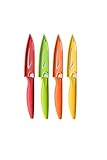
The Vituer set appeals to buyers who want multiple knives for light everyday work and don't mind a thin blade. Owners consistently praise the sharpness out of the box and the value for small cutting jobs like fruit prep and gentle vegetable work. The individual sheaths are a practical plus for safe storage and travel. The core trade-off is blade rigidity; buyers report the thin German stainless steel starts to bend when you apply sustained pressure on harder produce like apples. This isn't a liability for soft fruits, delicate garnishing, or occasional use, but it's a real consideration if you plan to use one knife for tougher daily work.
Compared to the Mercer Culinary bar knife, the Vituer set prioritizes quantity and color variety over a single premium blade. If you like having backup knives scattered around the kitchen or want to test whether a bar knife suits your workflow before committing to a better-built single knife, this set earns its place. Hand washing is essential to prevent the rust spotting a few owners mentioned.
Pros
- Four knives with individual protective sheaths included
- Sharp from the box for fruit and vegetable prep
- Colorful handles and compact size for kitchen organization
Cons
- Thin blade flexes under pressure on hard produce
- Prone to rust spots in dishwasher despite stainless steel
Key features (4)
- Four-piece set with color-coded German stainless-steel blades
- Individual sheath covers for each knife
- 56 HRC Rockwell hardness for initial edge sharpness
- Ergonomic PP plastic handles with integrated blade design
Mercer Culinary has built a reputation in professional kitchens for balancing performance and price, and this 4-inch bar knife reflects that ethos. Owners describe it as sharp, well-balanced, and versatile enough to handle tomatoes, citrus, bread, and onions without tearing. The textured handle provides real non-slip security when your hands are wet, and the included slide-on guard makes this knife genuinely safer to transport than loose blades. One owner specifically praised it as their go-to paring knife across multiple kitchen tasks, which speaks to how the design avoids the ergonomic strain that comes with poorly balanced blades.
Where the Vituer set gives you four knives, the Mercer delivers one well-made option that pro bartenders and culinary schools trust. The trade-off is that this single blade costs more than the entire Vituer collection, but the edge retention and build quality justify the investment for anyone who uses the knife several times a week. Like a best kiritsuke knife, which occupies a specialized niche in Japanese culinary technique, the Mercer carves out its own reliable space in bartending and everyday kitchen work without the premium price tag of a true specialty blade.
Pros
- High-carbon Japanese steel holds edge longer than entry-level blades
- Textured handle offers secure grip even when wet
- Versatile four-inch blade handles citrus, tomatoes, bread, and vegetables
Cons
- Included storage case is reportedly flimsy and difficult to use
- Requires hand washing and careful drying to prevent spotting
Key features (4)
- High-carbon Japanese steel blade for durability and edge retention
- Non-slip textured handle with slide-on safety guard
- Four-inch plain edge optimized for straight cuts and garnish work
- Professional-grade design trusted by bartenders and culinary schools
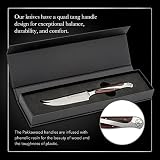
The Hammer Stahl sits at the top of the bar knife category, targeting mixologists and serious home bartenders who view the knife as a signature tool. The German X50CrMoV15 steel and quad-tang construction create a notably heavier, more substantial blade than the Vituer or Mercer options. Owners describe exceptional performance on citrus and say the skewer tip excels for detailed garnish work like twists and spirals. The knife ships laser-measured for precision and comes backed by a lifetime warranty, reflecting confidence in the build.
The caveat: initial sharpness varies according to reviews, and some owners report the edge dulls faster than expected when working citrus daily. This may relate to the acidity in lemon and lime juice, and regular maintenance with a whetstone is important. If you compare this to the Mercer Culinary bar knife, you're trading the Mercer's versatility across kitchen tasks for Hammer Stahl's specialized strength in garnish work and cocktail aesthetics. For someone who plans to use a bar knife several nights a week in a home bar setting and values the look and feel of a premium tool, the extra investment pays off in confidence and hand comfort.
Pros
- Heavy German steel with quad-tang design minimizes wrist tension
- Skewer-tipped blade excels at detailed garnish cuts and twists
- Lifetime warranty and laser-measured precision out of the box
Cons
- Edge dulls faster on citrus than some competitors despite high-carbon steel
- No protective sheath included despite premium price positioning
Key features (4)
- Premium German X50CrMoV15 high-carbon stainless steel
- Five-inch blade with skewer point for intricate garnishing
- Quad-tang handle design for ergonomic balance and reduced wrist strain
- Laser-measured blade geometry with 55–57 HRC Rockwell hardness
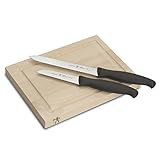
Henckels delivers a complete bar-top solution in one purchase: a 3-inch paring knife, 5-inch serrated utility knife, and a small wooden cutting board that serves as both workspace and presentation piece. Owners working behind home and professional bars report that this set lets them prep garnishes and fruit in one compact footprint without extra clutter. The knives come sharp and handle daily dishwasher abuse for years, as one owner confirmed after three years of heavy use. The serrated blade is particularly useful for bread and tougher citrus cuts that a smooth blade would tear.
The primary limitation is scale: the board fits only a few limes or lemons at once, and the compact design means it's not practical for larger cutting work. One owner's board deteriorated after five months, though the knives themselves remained durable, suggesting the wood component is the weakest link. The Henkcels set makes more sense for a bartender's station than a home cook's main kitchen, but where the Hammer Stahl knife focused on single-tool specialization, this set provides variety and accepts that form follows function in a tight space.
Pros
- Complete three-piece set with serving board in one purchase
- Knives remain sharp through repeated dishwasher cycles
- Serrated blade handles bread and tough citrus without tearing
Cons
- Tiny cutting board fits only 3–4 limes; not practical for larger prep
- Wooden board prone to splitting and deterioration over time
Key features (4)
- Three-piece set: 3-inch paring knife, 5-inch serrated utility knife, and wooden board
- Compact form factor designed for bar-top and tabletop use
- Dishwasher-safe knives that retain sharpness through heavy use
- Serrated blade for bread, citrus, and tougher cutting tasks
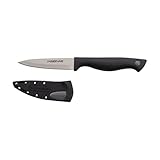
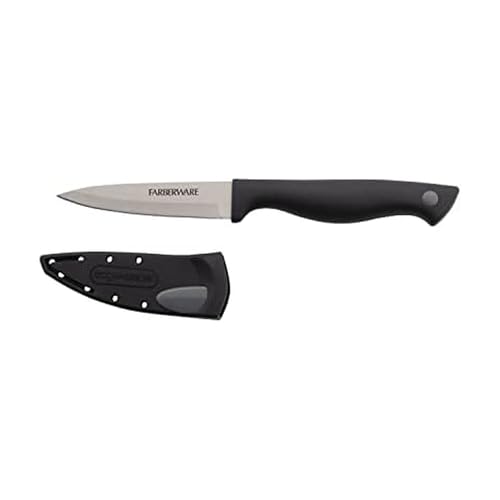
The Farberware Edgekeeper sells a convenience feature: a protective sheath that actively sharpens the blade as you slide the knife in and out. This appeals to buyers who don't own whetstones and want minimal maintenance. The knife itself is genuinely sharp from the box, the handle is ergonomically designed, and owners report it handles daily fruit and vegetable prep without complaint. For professionals making deli lunches or anyone who wants a low-friction knife at their desk, this compact design succeeds.
The self-sharpening mechanism, however, divides opinion. Multiple owners describe it as a gimmick that requires excessive effort and delivers barely noticeable improvement in edge quality. One buyer noted that after several uses, the sharpening effect was minimal, and they ended up using a proper whetstone anyway. Compared to the Henkcels set, the Farberware prioritizes a single high-volume tool for light repetitive work over versatility, and the self-sharpening cover is the key differentiator, even if it's more novelty than substance.
Pros
- Self-sharpening cover provides edge maintenance without separate tools
- Ultra-compact 3.5-inch blade with protective button-release sheath
- High-carbon stainless steel stays sharp for everyday fruit and vegetable prep
Cons
- Self-sharpening mechanism is ineffective and requires manual sharpening eventually
- Some units arrive dull or with loose covers out of the box
Key features (4)
- 3.5-inch high-carbon stainless-steel blade optimized for detail work
- Self-sharpening blade cover with button-release safety mechanism
- Ergonomic handle designed for comfortable grip during precision tasks
- Compact size fits in desk drawers and travel kits
How to Choose a Bar Knife
Single Knife vs. Multi-Piece Set
Consider whether you prefer one premium blade or multiple lighter-duty options. A single professional-grade knife like the Mercer or Hammer Stahl suits bartenders and cooks who work daily with garnishes and can justify the maintenance commitment. Multi-piece sets like Vituer or Henkcels work better for kitchens with limited space or buyers still testing whether a bar knife fits their workflow. Sets often include sheaths and cutting boards, which add value upfront but may sacrifice edge retention compared to a single well-made blade.
Blade Material and Edge Retention
German and Japanese high-carbon stainless steels hold sharper edges longer than entry-level alternatives, though they require hand washing and proper drying. German steel (like Hammer Stahl's X50CrMoV15) tends to be heavier and more durable under heavy pressure, while Japanese steel (Mercer Culinary) balances sharpness with ease of maintenance. Lower Rockwell hardness ratings (52–54 HRC) sharpen faster but dull faster; professional-grade blades (55–57 HRC) stay sharp longer. Budget sets under 56 HRC may flex under pressure on hard produce, which is a real trade-off to evaluate based on your cutting style.
Size and Specialization
Bar knives typically range from 3 inches to 5 inches. Smaller blades (3–3.5 inches) excel at precision garnish work, peeling, and detail cuts on fruit. Larger blades (5 inches) handle bread, tougher citrus, and broader vegetable work. Straight-edge blades cut cleanly through soft fruits and delicate garnishes, while serrated edges grip bread and prevent tearing on tough skins. Understanding the bar knife versus paring knife distinction matters here: paring knives are lighter and designed for hand-held detail work, while bar knives often include reinforced handles and skewer tips for garnishing. Your primary use (home bar garnishing vs. kitchen prep) should drive the size choice.
Handle Design and Grip Security
A bar knife spends time in wet, slippery environments, so handle texture and balance matter. Textured or rubberized handles like the Mercer provide non-slip grip when hands are wet. Quad-tang designs (Hammer Stahl) distribute weight more evenly and reduce wrist strain over long prep sessions. Comfort during extended use prevents hand fatigue and keeps you safer when handling a sharp blade. Ergonomic shape should fit your hand size and cutting style; if you prefer pinch-grip control, a slender handle suits you better than a thick one.
Maintenance and Sharpening Commitment
High-carbon steel blades require hand washing and immediate drying to prevent rust spots, especially if you work with acidic citrus. Budget-friendly knives may tolerate occasional dishwasher use, but professional-grade blades demand manual care. Bar knife sharpening and care should factor into your choice: do you own a whetstone and know how to use it, or do you prefer a blade that arrives pre-sharpened and stays that way longer? Lifetime warranties (like Hammer Stahl's) signal confidence in durability but don't eliminate the need for seasonal honing. Budget sets may dull faster but cost less to replace if mistreated.
Our picks at a glance
2
Best Professional-Grade PickMercer Culinary
3
Premium Bartender's KnifeHammer Stahl
4
Best Value Set with Cutting BoardHenckels
5
Best for Convenience SharpeningFarberware
Frequently asked
What is the difference between a bar knife and a paring knife?
While both are small blades for detail work, bar knife versus paring knife reflects different design priorities. Paring knives are lightweight and designed for hand-held peeling and delicate vegetable prep. Bar knives are heavier, feature reinforced handles and often skewer tips, and are built to withstand repeated pressure on citrus and garnish cuts. Bar knives work in professional or home bar environments; paring knives suit general kitchen prep. A bartender's knife may sub for a paring knife, but not vice versa if you do heavy garnishing.
Can I put my bar knife in the dishwasher?
Hand washing is always recommended to extend edge life and prevent rust, especially on high-carbon steel. Henkcels and Vituer knives tolerate dishwasher cycles and owners report durability over years, but repeated heat and detergent accelerate dulling and can cause spotting. If convenience matters more than maximum edge retention, entry-level sets handle the dishwasher. Professional-grade blades like Mercer and Hammer Stahl should be washed immediately by hand, dried completely, and stored dry to preserve their investment.
How often should I sharpen my bar knife?
Sharpening frequency depends on use intensity and blade material. A bartender using a knife nightly on citrus may need honing every 2–4 weeks with a steel or strop, and whetstoning every 2–3 months. Home cooks using a bar knife 2–3 times per week may go 6 months between whetstoning sessions. Budget blades dull faster and may need sharpening sooner. Self-sharpening covers like Farberware's provide minimal benefit; investing in a 1000/6000 grit stone or professional sharpening yields better results than relying on a protective sheath.
What size bar knife should I buy for home use?
For a home bar, a 4–5 inch blade is ideal: long enough to handle citrus wedges and twists, short enough for precise control over garnish details. A 3.5-inch blade works if counter space is tight or you primarily do delicate peeling work. Consider your hand size and grip style; smaller hands may find a 4-inch blade more comfortable than a 5-inch one. If you're building a complete station, pairing a small paring blade with a serrated utility knife (like Henkcels offers) gives you versatility without overwhelming your bar layout.
Why do some bar knives arrive dull despite claims of sharpness?
Sharpness is subjective and varies with blade steel, production batches, and shipping conditions. Professional knives are honed to the factory standard, but a home cook's expectation of razor-sharp may differ from a bartender's. Some owners report receiving dull blades or discovering that edge quality degrades after a few uses. If a knife arrives duller than expected, hand washing and careful drying help, but you may need to whet it on a proper stone or take it to a sharpening service to achieve peak sharpness. Checking return policies before purchase is prudent.