Kitchen & Dining · Small
Best BPA Free Air Fryer: Top Glass & Ceramic Picks
Find the safest BPA-free air fryers with ceramic coatings and glass baskets. Compare top models for healthier cooking without harmful chemicals.
Affiliate disclosure: As an Amazon Associate I earn from qualifying purchases.
At a glance
2
Best for Health-Conscious CooksNutriChef
4
Best Premium OptionCuisinart
Detailed reviews
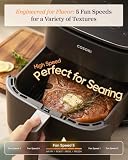
The Cosori TurboBlaze earns its top spot through a combination of features that matter to health-conscious cooks and busy households alike. The PFAS-free ceramic coating on both the basket and crisper tray eliminates the worry about nonstick degradation over time. Owners consistently report that the machine stays quiet even at maximum fan speed, which makes a real difference if your kitchen opens into living space. The six-quart square basket gives you enough room to cook a whole chicken or substantial sides without crowding, and the five-speed airflow system means you can dial in the right circulation for everything from delicate fish to frozen fries.
What sets this model apart is the breadth of cooking modes: air fry, roast, bake, broil, dry, frozen, proof, reheat, and keep warm. That versatility paid off for owners who use it for tasks beyond air frying, proofing bread dough, dehydrating fruit, even soft-boiling eggs. The ceramic coating and dishwasher-safe parts make cleanup straightforward, and multiple reviewers mentioned they stopped using their traditional oven almost entirely after buying this unit.
Compared to the Ninja Air Fryer Pro, this unit offers more granular control through five fan speeds and a wider temperature range (up to 450°F versus 400°F), which appeals to cooks who want precision. The trade-off is that it's larger and heavier, so counter space matters. If you have the room and cook regularly for multiple people, the Cosori justifies its position.
Pros
- PFAS-free ceramic coating on basket and crisper tray
- Five-speed airflow for precise temperature and circulation control
- Nine cooking modes including proof, dry, and keep warm
- Runs exceptionally quiet, under 53 decibels at max speed
Cons
- Large footprint and weight limit placement flexibility
- Vegetables require careful timing; some owners reported inconsistent browning
Key features (5)
- 6-quart square basket with PFAS-free ceramic coating and dishwasher-safe design
- Five-speed TurboBlaze airflow system, temperatures from 90°F to 450°F
- Nine preset functions plus customizable time and temperature control
- 1725W power with soft-start motor for quiet operation under 53dB
- Removable crisper plate and safety lock for stable cooking
The NutriChef stands out because it removes a source of anxiety many people carry: the question of whether a nonstick coating will degrade and end up in your food. By using borosilicate glass instead, it sidesteps that concern completely. Glass is inert, doesn't scratch easily, and won't peel or flake: a real advantage for anyone who's had a previous air fryer deteriorate after a few months of careful use. Owners who switched from traditional nonstick models specifically cite the relief of cooking on a surface that genuinely doesn't have a chemical finish.
The transparent basket solves another practical problem: you can watch your food cook without repeatedly opening the drawer and losing heat. Multiple reviewers appreciated that the glowing heating element and clear view window let them catch food at the exact moment of perfect browning. The stainless steel mesh tray lifts food off the bottom, promoting even air circulation underneath.
Where this differs from the Cosori TurboBlaze is capacity and temperature ceiling. The NutriChef tops out at 390°F (versus 450°F), which still works well for most home cooking but edges behind in searing speed. The 5.8-quart capacity is smaller than the Cosori's six-quart square design. The glass basket is noticeably heavier, and while most cooks adapt, anyone with wrist or grip concerns should handle one in person first. For apartment dwellers, smaller households, or those who've had bad experiences with nonstick coatings peeling, the glass trade-off is worth it.
Pros
- True borosilicate glass basket eliminates nonstick chemical concerns
- Transparent design lets you monitor food without opening basket
- Stainless steel mesh tray cleans easily without grease traps
- Extremely quiet operation compared to traditional nonstick models
Cons
- Glass basket is heavy and requires careful handling when hot
- Maximum temperature of 390°F is lower than premium models
Key features (5)
- 5.8-quart borosilicate glass basket with stainless steel lift-away mesh tray
- Clear top-mounted viewing window and glowing heating element visibility
- Eight preset modes plus manual temperature (up to 390°F) and 60-minute timer
- 1200W heating element with 360-degree hot air circulation
- Dishwasher-safe glass and mesh tray; includes silicone trivet mat
The Kismile fills a genuine gap for apartment dwellers, dorm rooms, and couples who don't need a family-size footprint. At 5 quarts, it's noticeably smaller than the Cosori or NutriChef, yet still holds enough for a meaningful dinner for two or three. The BPA-free glass basket and coating-free design echo the safety priorities of larger models but in a truly portable form factor. Some owners reported fitting it in awkward corner spaces or even taking it to second homes because moving it wasn't a burden.
The 1500W power is competitive for the size, and the eight preset modes cover the everyday cooking most people actually do. The digital touch panel offers temperatures from 100°F (useful for gentle reheating) to 400°F, hitting the sweet spot for crisping without the added bulk of 450°F capability. Owners who cooked simpler meals (frozen sides, reheating, occasional snacks) found it reliable and efficient.
The main caveat is that one reviewer reported unresponsive touch controls that required multiple attempts and resets to engage. That's not universal, but it suggests quality control variance. Also, the 5-quart capacity, while fine for individuals or pairs, means more batches if you're cooking for four or more. Where the Kismile makes sense is against the Cuisinart Air Fryer, which is also compact but uses a ceramic crisper plate instead of full glass; if full glass is your priority, this is the smaller option.
Pros
- Compact footprint ideal for limited counter and storage space
- BPA-free glass basket with no chemical coatings
- 1500W power heats quickly for portable size
- Eight preset modes and 60-minute timer for everyday cooking
Cons
- Touch controls sometimes unresponsive, requiring repeated presses or resets
- 5-quart capacity means multiple batches for larger families
Key features (5)
- 5-quart BPA-free glass cooking basket with removable bottom tray
- 1500W heating element with compact, portable design
- Digital touch control, eight presets, temperatures from 100°F to 400°F
- Dishwasher-safe glass basket and detachable tray with oil-separating base
- Interior light for monitoring food without opening basket
The Cuisinart reimagines the air fryer as a multi-purpose vessel rather than just a cooking tool. The idea of prepping ingredients directly in the glass basket, cooking them, and then serving or storing without transferring to another dish appeals to cooks who want fewer pans and faster cleanup. The 4-quart capacity sits between compact and family-size, and the borosilicate glass with an included lid turns it into something that bridges air fryer and baking dish functionality. Owners genuinely seemed to enjoy that double life.
The PFAS-free ceramic crisper plate means you avoid the nonstick worry, and the 450°F ceiling gives you searing power. The interior light and clear top window let you monitor cooking without heat loss. The five cooking functions (air fry, bake, broil, recrisp, keep warm) plus two customizable presets cover most home needs. Cleanup is genuinely easy: glass basket and ceramic tray both go in the dishwasher.
The premium positioning shows in the 3-year warranty and Cuisinart's design polish. Where it trades off against the Cosori TurboBlaze is capacity: the 4-quart glass basket is smaller, and the square ceramic crisper tray has less surface area than the Cosori's six-quart design. If you're cooking for two people regularly with occasional guests, or if you value the prep-to-table versatility and shorter cleanup time, the price premium makes sense. For high-volume family cooking, the Cosori still edges ahead.
Pros
- Innovative glass basket with included lid for serving and storage
- PFAS-free ceramic crisper plate, no harmful nonstick coatings
- Interior light and top window for monitoring without opening
- Five cooking functions plus two customizable preset buttons
Cons
- 4-quart capacity is smaller than family-size air fryers
- Heating element toward the back means slightly uneven browning in front
Key features (5)
- 4-quart borosilicate glass cooking basket with included ceramic-coated lid
- PFAS-free ceramic crisper plate, dishwasher-safe glass and tray
- Clear top viewing window and interior light for real-time monitoring
- Five cooking functions with adjustable temperature in 5-degree increments up to 450°F
- Heats and pauses automatically when basket opens, resumes when closed
The Ninja Air Fryer Pro prioritizes performance and capacity over materials choices. Unlike the glass and ceramic-focused models above, this uses a traditional nonstick coating on the basket and crisper plate. That means it doesn't address PFAS concerns the way the Cosori ceramic or NutriChef glass options do. However, it delivers excellent cooking results at a lower price point, and for cooks who aren't specifically avoiding nonstick surfaces, the trade-off can make sense.
The 5-quart nonstick basket fits up to 4 pounds of fries or 5 pounds of wings, matching or exceeding the capacity of some glass competitors. The 1750W power and 400°F ceiling crisp food effectively. The four functions (air fry, roast, reheat, dehydrate) are slightly fewer than the Cosori's nine, but cover everyday needs. Owners consistently praised how fast the Ninja heats and cooks, and how easy the nonstick surface wipes clean. The square shape gives you more usable floor space than round alternatives.
Where this differs from the health-first models is material transparency. If avoiding nonstick coatings is your priority, the Cosori TurboBlaze with its ceramic coating or the NutriChef with glass are better choices. The Ninja makes most sense for budget-conscious households who want reliable performance and don't have specific concerns about nonstick durability. Compared to the best ceramic air fryer options, you're trading material safety for lower cost and fast cooking.
Pros
- 1750W power cooks quickly with even heat distribution
- Large 5-quart capacity with square design fits more food per batch
- Four versatile functions cover everyday cooking and meal prep
- Nonstick basket and crisper plate wipe clean easily
Cons
- Traditional nonstick coating lacks BPA-free or PFAS-free material claim
- No preheating feature; you must run it for a few minutes before cooking
Key features (5)
- 5-quart nonstick basket and removable crisper plate with square design
- 1750W power, Air Crisp Technology, maximum temperature 400°F
- Four customizable cooking functions: air fry, roast, reheat, dehydrate
- Fits up to 4 lbs fries or 5 lbs chicken wings in a single batch
- Includes 20 recipe book and cooking charts
How to Choose a BPA-Free Air Fryer
Basket Material Matters Most
The basket is where safety claims matter most. Glass baskets (borosilicate) are inert and won't degrade: you see this in the NutriChef and Kismile models. Ceramic coatings, like the Cosori's PFAS-free surface, replace older Teflon with a harder, non-toxic alternative. Traditional nonstick finishes (the Ninja) lack these specific health claims. If you've had previous air fryers where the coating chipped or flaked, glass or ceramic eliminate that concern entirely. BPA-free air fryer materials explained in detail helps clarify what each coating means and why the difference matters over years of use.
Capacity and Shape Fit Your Cooking Style
A six-quart square basket (Cosori) feeds a family of four with minimal batching. A five-quart round or glass design (NutriChef, Ninja) suits couples and small households. A four-quart compact (Kismile, Cuisinart) works for dorms, apartments, or as a second unit. Consider what you'll actually cook most: if you're meal-prepping for the week or cooking multiple sides at once, larger capacity saves time. If you live alone or want portability, smaller pays off through easier storage and lower counter presence.
Temperature Range and Function Count
Models reaching 450°F (Cosori, Cuisinart) sear proteins slightly faster than 400°F ceilings. That difference matters if you cook steaks frequently; for frozen fries and everyday meals, 400°F is plenty. Function count varies from four (Ninja) to nine (Cosori). Ask yourself: will you actually use dehydrate, proof, or broil? Many cooks stick to air fry and reheat. More functions add complexity but also flexibility if you want to experiment beyond basic cooking.
Cleaning and Long-Term Durability
Glass and ceramic surfaces simplify cleanup because grease doesn't absorb into porous nonstick coatings that degrade over time. Dishwasher-safe baskets save hand-washing effort. If you're frustrated by nonstick coating flaking or chemical smell on first use, glass eliminates both problems. The air fryer basket cleaning guide covers maintenance strategies that extend basket life, but starting with a coating-free design removes that maintenance burden entirely.
Noise Level and Aesthetics
The Cosori runs under 53 decibels, noticeably quieter than many competitors. Glass models (NutriChef, Kismile, Cuisinart) look sleeker on open countertops due to the transparent basket. If your kitchen opens into living space, quieter operation and visual appeal both influence daily satisfaction. Some owners keep their air fryer on the counter permanently rather than storing it; design matters if yours will be visible.
Our picks at a glance
2
Best for Health-Conscious CooksNutriChef
4
Best Premium OptionCuisinart
Frequently asked
What exactly is PFAS, and why avoid it in air fryers?
PFAS (per- and polyfluoroalkyl substances) are synthetic chemicals used in traditional nonstick coatings. They don't break down easily in the environment or body, and studies suggest potential health effects from long-term exposure. Air fryers heat nonstick surfaces repeatedly, raising concerns about coating degradation. Glass and ceramic-coated models avoid PFAS entirely, giving you peace of mind over years of daily cooking without worrying about coating chips or chemical odors.
Is a glass basket heavier to handle than a metal one?
Yes, glass baskets (borosilicate) are noticeably heavier than aluminum or thin stainless steel. The NutriChef and Kismile both weigh more when full of hot food. Most cooks adapt within a few uses, but anyone with limited grip strength or wrist mobility should test one in person first. Using an oven mitt or silicone trivet (often included) makes handling easier and protects countertops from heat.
Do ceramic-coated air fryers perform as well as glass?
Yes. The Cosori's ceramic coating delivers identical cooking results to glass: crispy outside, moist inside. Ceramic is lighter than glass, easier to move, and still avoids the nonstick degradation problem. The choice between ceramic and glass is partly about visibility (glass lets you watch food cook) and personal preference. Both are genuinely safe, durable alternatives to traditional nonstick.
Can I use the best ceramic air fryer or glass model in the dishwasher?
Most modern models with ceramic or glass baskets are dishwasher-safe on the bottom rack, but always check your manual. The Cosori, NutriChef, Kismile, and Cuisinart all list dishwasher-safe baskets and trays. Hand-washing works fine too and is often faster for small parts. The main advantage of glass or ceramic is that neither material absorbs odors or greases the way some nonstick coatings do, so cleanup is genuinely easy either way.
Will a smaller air fryer save on electricity compared to a larger model?
Slightly, but not dramatically. A compact 5-quart unit uses less energy per cycle than a 6-quart, but if you need two batches in a 5-quart to match one 6-quart load, you break even or lose efficiency. The bigger variable is how often you use the air fryer versus your oven or stovetop. Switching from your conventional oven to any air fryer (large or small) saves significant energy because air fryers heat faster and cool the kitchen less in summer.