Kitchen & Dining · Small
Best 24 Inch Microwave: Countertop & Over-the-Range Options
Compare top 24 inch microwaves for kitchens of all sizes. Find the best countertop and over-the-range models with sensor cooking and ventilation.
Affiliate disclosure: As an Amazon Associate I earn from qualifying purchases.
At a glance
1
Best Overall Capacity & FeaturesToshiba
2
Best Over-the-Range for Modern KitchensGE
3
Best Design & Ventilation PowerSharp
4
Best Built-In for Seamless IntegrationFrigidaire
5
Best Budget Over-the-Range OptionCosmo
Detailed reviews
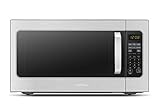
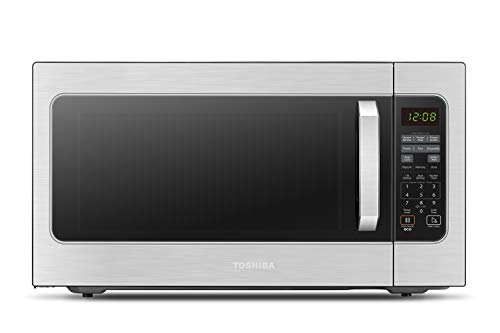
The Toshiba stands out for raw interior space: 2.2 cubic feet is the biggest footprint in this lineup and handles a sixteen-inch pizza or whole bird without compromise. The build feels solid, and real owners praise the sensor technology for consistency; one reviewer noted the turntable thoughtfully rotates finished food to the front for easy access, a small detail that matters in daily life. The 23 preset menus and ten power levels give you granular control for everything from reheating vegetables to defrosting by weight, which beats the simpler preset-only approach of some competitors.
The frozen-pizza function is a lesson in reading the manual; it's designed for already-baked, previously-cooked pizzas you're reheating, not raw dough. When used as intended, it delivers respectable results. If you compare this to the smaller GE or Sharp over-the-range models, the Toshiba trades counter placement for volume: ideal if you have the surface real estate and want one appliance that genuinely handles large family meals.
The one gotcha: the door latch takes getting used, and a handful of buyers report seal issues after extended use. Toshiba's warranty support can feel slow, so factor that into your comfort level. That said, owners who avoid the frozen-pizza button with raw pies, and who treat the unit normally, report years of trouble-free operation.
Pros
- Largest capacity at 2.2 cu. ft. fits full meals
- Smart sensor adjusts power automatically
- Thoughtful turntable positioning at end of cycle
Cons
- Door latch has a learning curve
- Warranty support can be slow to respond
Key features (5)
- 2.2 cu. ft. capacity with 1200W power
- Built-in humidity sensor for even heating
- 23 preset menus and 10 power levels
- 16.5-inch turntable, mute option, child safety lock
- ECO mode and memory function for efficiency
The GE 24-inch over-the-range is the premium pick here, and buyers consistently cite the industrial feel and finish quality right out of the box. The stainless steel and hidden vent give it a high-end appearance, and the interior LED lighting is noticeably brighter than most competitors in this space. At 1.4 cubic feet, it's smaller than the Toshiba countertop, but the 300 CFM hood vent pulls hard: crucial if you cook with real heat or live in a tight apartment where steam lingers.
Sensor cooking works smoothly, and the Express Cook buttons (1-6 for quick minutes) appeal to people who want speed over complexity. Installation is heavier than average, but reviewers who had help report it's straightforward if you follow the mounting sequence. One buyer noted the unit arrived with shipping-damaged packaging yet emerged unscratched thanks to dense foam, a sign of thoughtful protection in design.
Where it differs from the Cosmo or Sharp: the GE's 1000-watt engine is standard-class, neither weak nor overpowering, and the smaller capacity means tight quarters if you're cooking large dishes. Compared to the Toshiba, you're trading countertop real estate for a cleaner line and integrated ventilation: a smart swap if your kitchen design is the priority.
Pros
- Premium stainless steel finish with hidden vent
- Bright LED lighting inside and above cooktop
- Heavy, solid construction feels durable
Cons
- Smaller 1.4 cu. ft. capacity than countertop models
- Requires two-person installation due to weight
Key features (5)
- 24-inch over-the-range with 1.4 cu. ft. capacity
- 300 CFM ventilation with auto-on heat sensor
- LED interior and cooktop lighting
- Sensor cooking and Express Cook (1-6 buttons)
- Recirculating and venting options with charcoal filter
The Sharp brings the sleekest visual package in the lineup with its edge-to-edge black glass and stainless steel frame; the gray interior is a modern touch that avoids the dated white-box look. The 300 CFM two-speed ventilation is muscular: one owner described testing it outside their RV and feeling "blow-dryer" intensity. If you have an open kitchen or cook with any regularity, that fan power cuts steam and odor fast, a meaningful quality-of-life upgrade over weaker hood models.
At 1.4 cubic feet, it's the same footprint as the GE, but the Sharp's thirteen-inch turntable carousel is notably easy to work with. The Melt/Soften feature is specifically tuned for cream cheese and chocolate, a detail suggesting Sharp thinks about actual cooking tasks rather than just generic presets. The sensor cooking suite is clean and straightforward, and the +30 second button gives you quick-fire adjustments without fumbling through menus.
Compared to the Cosmo, the Sharp costs more but the vent system is noticeably superior. Cosmo buyers report strong fan performance too, but Sharp's two-speed option gives you flexibility Cosmo doesn't. The tradeoff is capacity: you give up the Toshiba's 2.2 cubic feet for space-saving elegance. Install is typical over-the-range complexity, and reviewers praise how straightforward the ductless or ducted vent configuration is.
Pros
- Edge-to-edge black glass creates seamless look
- Two-speed 300 CFM fan is exceptionally strong
- Melt/Soften preset tuned for chocolate and butter
Cons
- Same 1.4 cu. ft. capacity as competitors at this price tier
- Premium styling adds cost versus basic models
Key features (5)
- 24-inch over-the-range with edge-to-edge styling
- 1.4 cu. ft. capacity with 1000W power
- Two-speed ventilation up to 300 CFM
- Sensor cook menu and +30 second instant-add button
- 12.8-inch carousel turntable, LED display, charcoal filter
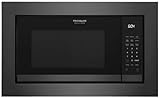
The Frigidaire is a built-in (not over-the-range), meaning it installs flush into a cabinetry opening: a crucial distinction from the models above. At 2.2 cubic feet, it matches the Toshiba countertop for interior volume, so you get large-meal capability in a seamless, integrated form. The one existing owner emphasizes it's dramatically quieter than their previous unit and retains the same control logic, which speaks to evolutionary design thinking rather than a ground-up reinvention.
Built-in microwaves solve the kitchen-design puzzle if your cabinetry is already dimensioned for one or you're investing in a full remodel. This model uses black stainless steel, a finish that's harder to fingerprint than traditional stainless and pairs well with modern appliance suites. The sensor cook function is present and capable, though the available buyer feedback is limited (only one detailed review so far), so you're relying more on Frigidaire's track record than extensive real-world consensus.
Where it falls short versus the Toshiba: less detailed preset variety and no turntable positioning feature. Compared to over-the-range options like the GE or Sharp, you lose integrated ventilation entirely, so you'll need a separate range hood if you don't have one. The builder-grade feel and two-decade longevity Frigidaire customers report suggest durability, but thin review volume makes it harder to predict edge-case failure modes.
Pros
- 2.2 cu. ft. capacity rivals the Toshiba countertop
- Black stainless steel finish resists fingerprints
- Dramatically quieter operation than prior-generation units
Cons
- Requires custom cabinetry opening; not flexible placement
- Limited owner reviews available for validation
Key features (5)
- 24-inch built-in with 2.2 cu. ft. capacity
- Black stainless steel with sensor cook
- Designed for seamless cabinetry integration
- Electric operation, 1000W power output
- Trim kit and dimension-critical installation required
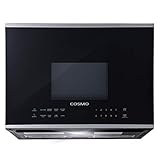
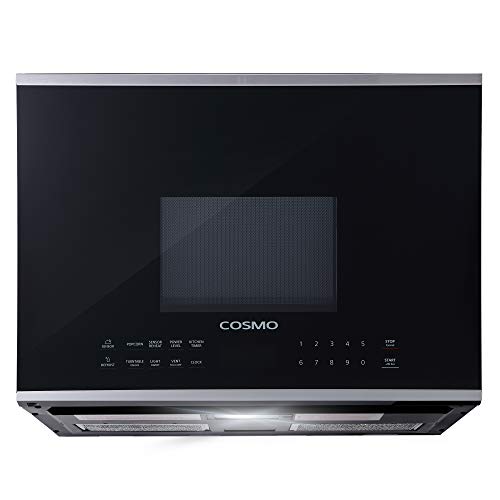
The Cosmo is an affordable over-the-range option here and punches above its price class with a fan that one RV owner described as genuinely impressive, testing it outside felt like standing in front of a blow dryer. At 1.34 cubic feet, it's slightly smaller than the GE or Sharp but still handles standard family portions and casseroles. The 1000-watt engine is adequate, and sensor reheat and cook modes work reliably according to dozens of owner accounts.
What you trade for the lower cost: fewer niceties. The touch presets are simpler than the Toshiba's 23-menu suite, and the digital display is more utilitarian. Some owners find the continuous beeping after the cycle ends annoying (though it can be a useful reminder). The door requires careful installation clearance on the hinge side, so measure twice before mounting. The small viewing window is a minor frustration for those who like peeking at food, and there's no convection or air-fry mode if that was on your wishlist.
Compared to the Sharp's two-speed vent and premium finish, Cosmo saves you roughly two to three hundred dollars; compared to the GE, you lose the industrial build quality and LED cooktop lighting but keep solid core function. RV owners especially favor this unit because it's lightweight-ish and proven in mobile applications. For apartments or kitchens where you're not expecting a fifteen-year investment, the value calculation tips decisively in Cosmo's favor.
Pros
- Exceptionally strong ventilation fan for the price
- Entry-level cost without sacrificing core performance
- RV-friendly design and lightweight frame
Cons
- 1.34 cu. ft. is smallest capacity in lineup
- Door requires careful clearance during installation
Key features (5)
- 24-inch over-the-range with 1.34 cu. ft. capacity
- 1000W power with 10 adjustable levels
- Integrated vent fan up to 300 CFM
- Sensor reheat and cook modes
- Touch presets for melt, soften, defrost, popcorn
How to Choose a 24-Inch Microwave
Countertop vs. Over-the-Range
This decision shapes everything else. Countertop models (like the Toshiba) sit on your counter and free up no cabinet space, but they claim prime real estate where you might prep food or rest hot dishes. Over-the-range units (GE, Sharp, Cosmo) mount above your stove, replacing an air gap and providing built-in ventilation: invaluable if you cook with heat or live in an open-concept home. Built-in models (Frigidaire) recess into custom cabinetry for a seamless look but require pre-existing or specially framed openings. The countertop versus over-the-range microwaves differ fundamentally in installation and kitchen flow; your choice depends on whether you value counter space or a streamlined visual line.
Capacity and Cooking Power
Most home cooks underestimate how much space they actually need. The Toshiba's 2.2 cubic feet handles a 16-inch pizza or whole chicken without pressure; the over-the-range models at 1.3–1.4 cubic feet fit standard 9x13 casseroles but struggle with oversized dishes. Wattage matters less than people think: 1000W versus 1200W is a difference of seconds, not minutes. What matters more is sensor cooking technology explained through how the unit detects moisture and adjusts power automatically. If you frequently reheat or cook fresh food (not just thaw frozen items), sensor modes are worth the premium. If you mostly popcorn and reheat leftovers, simpler preset buttons suffice.
Ventilation and Hood Performance
Over-the-range models integrate a hood vent; countertop models do not. If you're considering an over-the-range unit, the CFM (cubic feet per minute) rating tells you how fast it moves smoke and steam: 300 CFM is standard and adequate for most kitchens, but stronger pulls are better in tight spaces. Look for two-speed fans (like Sharp's) if you cook frequently but don't want constant loud whir. Charcoal filters (included with most units) need replacing every six to twelve months depending on use. Ductless recirculation is fine for apartments but less effective than venting outside; if you have the option, ducted venting is superior.
Controls and Preset Menus
Simpler isn't always better. The Toshiba offers 23 menus with weight-based defrost, which takes guesswork out of thawing meat; the Cosmo offers basic presets (popcorn, melt, soften) that handle ninety percent of real-world needs. Most models include a +30 second button for quick extensions without re-entering time. If you dislike learning new interfaces, choose a brand you've owned before (GE owners often stick with GE). LED displays and touch controls are standard now and improve legibility over older LCD versions. Mute buttons are surprisingly valuable if you cook early mornings or have young sleepers in the house.
Installation and Space Constraints
Over-the-range models are heavy (often 80+ pounds) and require two people for safe installation; the GE specifically demands careful attention to mounting brackets and electrical work. Countertop models need stable, level surface and close outlet access. The Cosmo's door hinge needs clearance on its opening side: measure before you buy. Built-in models require a custom cabinetry cutout and typically need an electrician, adding cost. If your kitchen outlet is far from where the microwave will sit, budget for a heavy-duty extension cord. Most installation failures come from undersized mounting hardware or incorrect venting configuration, not the units themselves; follow the manual carefully or hire professional installation.
Our picks at a glance
1
Best Overall Capacity & FeaturesToshiba
2
Best Over-the-Range for Modern KitchensGE
3
Best Design & Ventilation PowerSharp
4
Best Built-In for Seamless IntegrationFrigidaire
5
Best Budget Over-the-Range OptionCosmo
Frequently asked
Do I need a separate range hood if I buy a countertop microwave?
Yes. Countertop models have no ventilation system; they recirculate air inside the unit but don't remove smoke or steam from your kitchen. If you cook frequently or use high heat, a separate range hood above your stove is essential. Over-the-range microwaves replace this function, which is their main advantage in smaller kitchens.
What does sensor cooking actually do?
Sensor cooking uses a moisture-detection probe to measure steam rising from your food and automatically adjusts cooking time and power. If you put a cold plate of lasagna in and select sensor reheat, the unit reduces power as the food warms, preventing overheating or drying. It's especially useful for reheating and defrosting because it removes guesswork. Most units let you switch between sensor and manual power levels.
Can I fit a large casserole dish in a 1.4 cu. ft. microwave?
Usually, yes. A 9x13 casserole dish fits in most 1.4 cu. ft. models, though you may need to angle it slightly through the door. The 2.2 cu. ft. models (Toshiba and Frigidaire) accept them without fuss. If you regularly cook large dishes, measure your existing bakeware before buying: interior dimensions vary slightly by brand.
How often do I need to replace the charcoal filter in an over-the-range microwave?
Every six to twelve months, depending on how much you cook. If you use your stovetop multiple times daily, replace it sooner. Charcoal filters are inexpensive (usually under twenty dollars) and easy to swap yourself: no technician needed. Some brands include the first replacement in the box.
Is a countertop microwave or over-the-range model better for an apartment?
Countertop wins for apartments because it requires no installation, no venting work, and you can take it when you move. Over-the-range models demand mounting hardware changes that landlords may prohibit. The Cosmo is a solid budget over-the-range choice for RVs and mobile situations, but if you're renting a standard apartment, the Toshiba countertop avoids installation friction.