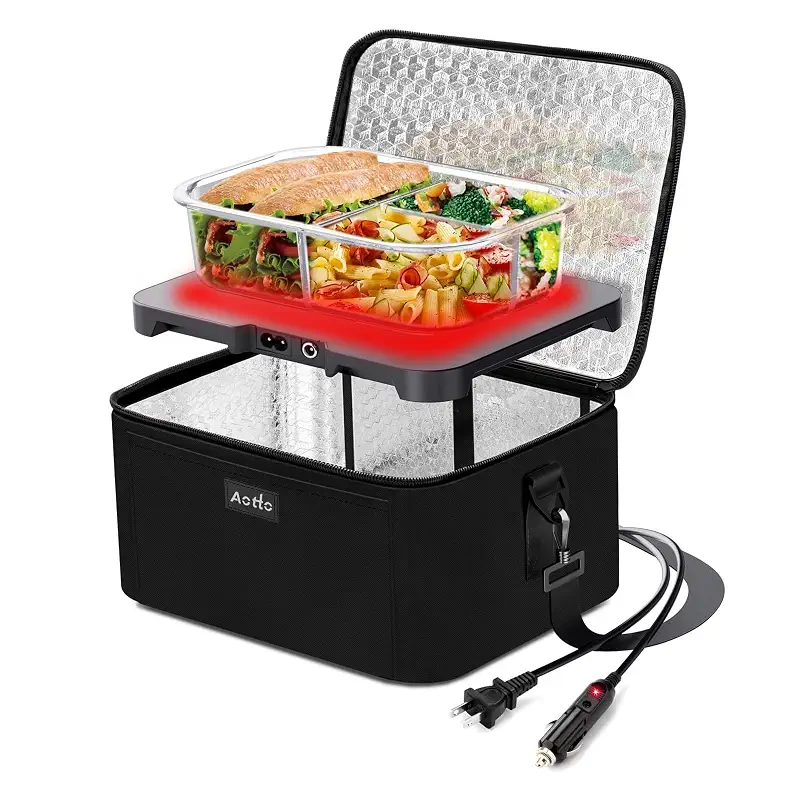
Best 12V Food Warmer: Portable Heating Lunch Boxes for Cars & Travel
Compare top 12V food warmers for cars, trucks, and offices. Find portable electric lunch boxes with fast heating and multi-voltage options for work and travel.
Verdict, analysis, and key features for each pick.
#1 Pick
Best Overall
Aotto
Aotto Portable Oven, Electric Lunch Box Food Heater - 12V/24V/110V 3-in-1 Car Food Warmer - Mini Personal Microwave Heated Lunch Box Warmer for Car, Truck, Travel, Office & Home Use - Black
4.6(4,895)
Versatile three-voltage warmer with container flexibility and consistent, gentle heating that preserves food moisture.
Ideal for: Home cooks who meal-prep in glass or metal containers and need flexible office, car, and travel heating.
The Aotto stands out because it genuinely lets you use whatever flat-bottomed container you already own: glass, stainless steel, ceramic, even cardboard. That flexibility matters in real kitchens where you're not buying another single-use appliance. The heating approach uses conduction rather than steam, which owners consistently praise for reheating without drying food or creating odors. You set it and walk away; there are no buttons, timers, or monitoring required.
Heating speed is moderate but predictable: plan 30 to 45 minutes for a standard lunch container. The triple-voltage design is genuinely useful if you switch between car and office, and the included dual power cords remove that friction. Build quality feels robust: the zipper, stitching, and collapsing design hold up to daily work use. One caveat: a few owners reported receiving two AC cords instead of one AC and one DC, though the manufacturer reportedly replaced them after email contact. The unit also emits a faint plastic smell initially, though buyers note it fades quickly and is less pronounced than competing models.
Where this compares well to the Hotlogic Mini is the container flexibility; the Aotto wins if you want to use meal-prep containers you already own. Against the Buddew, the Aotto heats slightly more slowly but is priced more competitively and offers superior container options.
Pros
Works with any flat-bottomed container you own
Conduction heating preserves moisture without drying food
Three voltage options with included dual power cords
Solid build quality with reliable zipper and stitching
Cons
Takes 30–45 minutes to fully heat a meal
Minor plastic smell during first few uses
Key features
triple-voltage with two included power cords
Accommodates containers up to 9.76" L × 7.01" W × 3.94" H
Gentle conduction heating without steam or moisture loss
Collapsible design with shoulder strap and carrying handle
#2 Pick
Best for Speed & Durability
Buddew
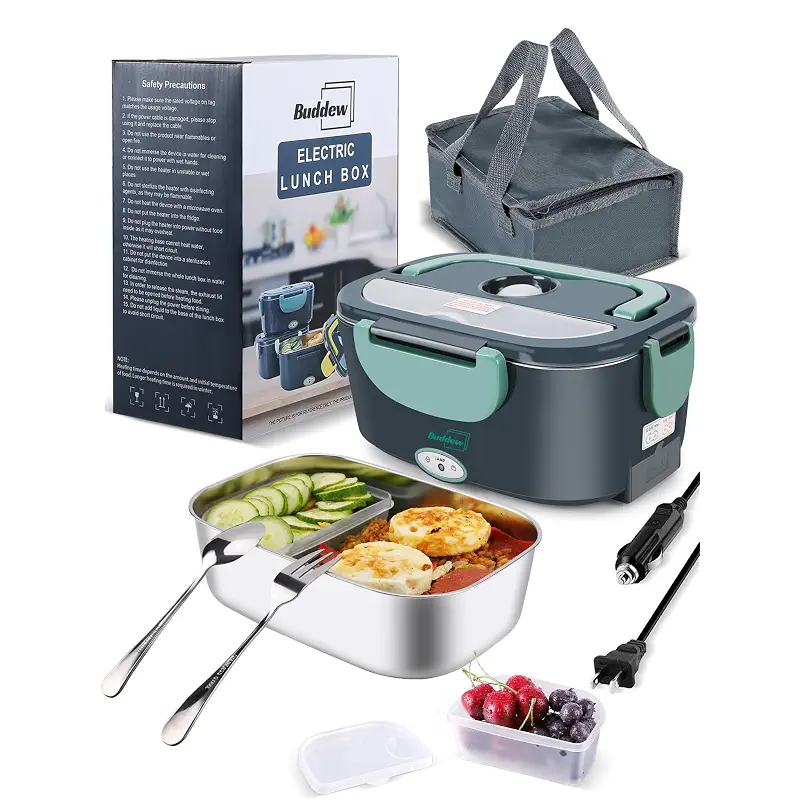
Buddew Electric Heated Lunch Box, 100W Fast Heating, 1.5L Food-Grade 304 Stainless Steel, 12V/24V/110V Portable Food Warmer for Car Truck Office Adults, Lonchera Electrica Portatil (Green)
4.6(7,440)
Fast 100W heating in 15–30 minutes with reinforced components and multi-voltage support for professionals and long-term users.
Ideal for: Truck drivers, construction workers, and field professionals who need meals heated fast and equipment that lasts years.
Buddew's 100W PTC heating technology is meaningfully faster than lower-wattage competitors. Most users report food ready to eat within 20–30 minutes on 110V, which matters if you have a short lunch break and no advance planning. The reinforced heating module and upgraded internal design directly address the failure point that plagued older models: units that stopped heating after a handful of uses. That engineering focus translates to fewer dead units in the field and longer lifespan.
The food-grade 304 stainless steel container is durable, dishwasher safe, and sealed against leaks even with soup. The 1.5L capacity suits a full adult meal, and the insulated carrying case is one of the better-made accessories in this category. Three voltage options (110V, 12V, 24V) with included cables make it equally at home in a truck, car, or office. One downside: a small percentage of buyers reported heating failure early in ownership, though the 2-year warranty and 1-year free replacement mitigate that risk. The unit is also slightly heavier and bulkier than the Aotto, which matters if compact portability is your priority.
Compared to the Hotlogic Mini's slower but incredibly reliable reputation, the Buddew trades some proven longevity for faster heating and industrial robustness. The extra wattage makes a real difference if you work a high-labor job and need hot food quickly.
Pros
100W PTC technology heats food in 15–30 minutes
Reinforced heating module designed to prevent failure
Food-grade 304 stainless steel, dishwasher safe
Three-voltage support with quality carrying case
Cons
Heavier and bulkier than compact models
Small number of early failures reported, though warranty covers it
Key features
100W fast-heating PTC technology with constant temperature control
1.5L food-grade 304 stainless steel container
Three-voltage (110V/12V/24V) with included home and car power cords
Reinforced heating plate for extended lifespan
#3 Pick
Best for Reliability & Simplicity
Hotlogic
HOTLOGIC Mini Heated Lunch Box - Portable Electric Food Warmer for Men and Women - Great for Work, Office, and Construction - Cook, Reheat, and Eat on the Go - 12V - Black
4.6(11,494)
Minimal-design 12V warmer with proven multi-year durability and container flexibility; slower heating offset by legendary reliability.
Ideal for: Truck drivers, travel workers, and anyone who prioritizes reliability and wants the same warmer to last 3+ years.
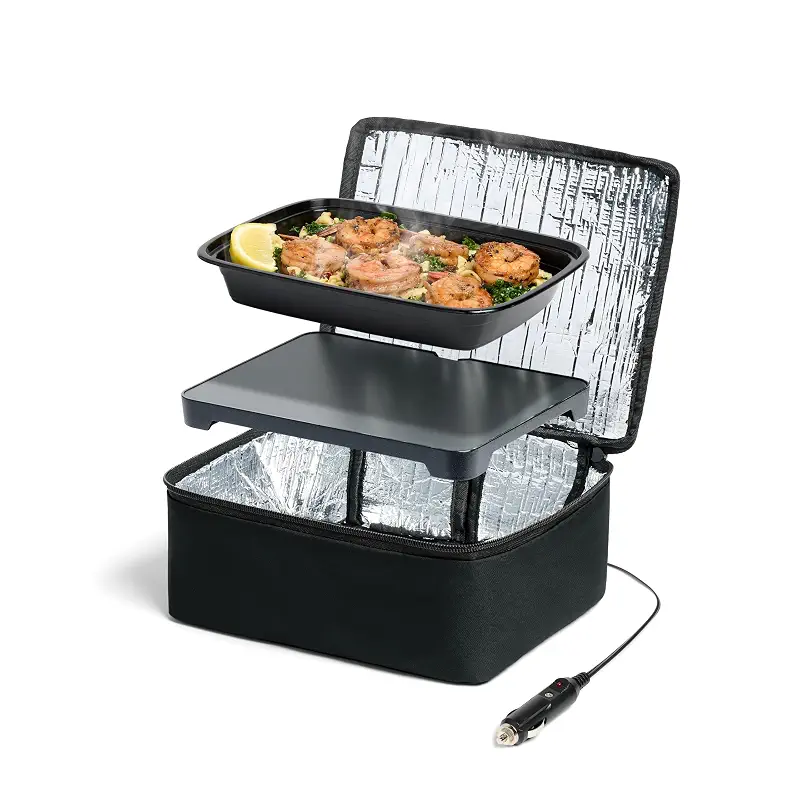
Hotlogic's Mini has accumulated over 11,000 reviews largely because it works reliably for years with almost no moving parts. There are no buttons, timers, or digital controls to fail. You plug it in, place your meal inside, and walk away. That simplicity attracts people who've had bad experiences with feature-rich warmers that died after a season. Many owners report using the same unit daily for 3–5 years without issues.
Heating speed is leisurely: 1–2 hours for a refrigerated meal, 2–3 hours for frozen food from a car outlet. On 110V home power, you can trim time somewhat, but this is a device for planning, not impulse. However, the tradeoff is that once it reaches temperature, it holds food at a safe, edible level indefinitely without overcooking or drying. Container compatibility is excellent: glass, plastic, Tupperware, metal, aluminum foil, and cardboard all work as long as the bottom is flat.
The one genuine limitation is speed; compared to the Buddew's 100W and 15–30 minute heat time, the Hotlogic feels slow. Power draw is also minimal, making it ideal for leaving on for extended periods without draining a car battery. If you value zero maintenance, unshakeable dependability, and don't mind slower heating, this unit justifies its loyal following. For someone jumping between the Hotlogic and the Zento Deals' lower power output, the Hotlogic's proven track record wins.
Pros
Exceptional multi-year reliability with minimal moving parts
Works with any flat-bottomed container
Very low power draw, safe to leave on for hours
No buttons or digital components to fail
Cons
Takes 1–3 hours to heat depending on meal temperature and power source
Slower than higher-wattage alternatives
Key features
Simple, button-free design: plug in and forget
Compatible with glass, plastic, metal, foil, and cardboard containers
Holds food at safe eating temperature indefinitely without overcooking
Minimal power draw, safe for extended car use
#4 Pick
Best Budget Option
Zento Deals
Zento Deals Heating Lunch Box – 12V Portable Mini Electric Warmer for Car Food - Perfect for Outdoors Travelling, Camping - Easy to Clean Insulated Lightweight
4.3(711)
Entry-level 12V-only warmer with modest heating power and long warm-up times, ideal for occasional road trips or tight budgets.
Ideal for: Occasional road-trippers and budget-conscious buyers who heat meals infrequently and have access to 12V power.
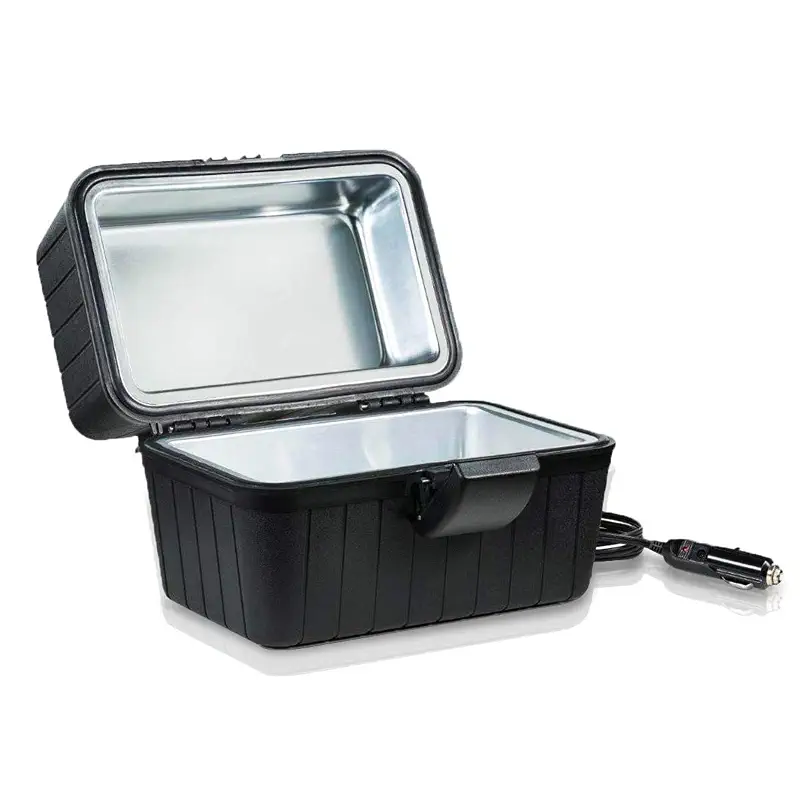
The Zento Deals unit costs significantly less than multi-voltage competitors, which appeals to buyers testing whether portable food heating fits their lifestyle. At roughly 108W of 12V-only power, it operates like a warm lightbulb rather than an appliance, meaning you need patience. Expect 45 minutes minimum for something like a burger in foil, or longer for refrigerated leftovers. A rice-and-sauce dish in foil heats faster than dry items, so wetness helps.
The design is straightforward: hardened plastic with metal heating plates inside, compatible with standard aluminum foil takeout trays (inexpensive, disposable, and keep the unit's interior clean). Build quality is decent for the price point, though insulation around the seams isn't optimal, and some heat escapes. The unit won't overheat food due to low wattage, which is safe but also means you're never getting steaming results.
Two critical constraints separate this from faster models: first, it only works on 12V, so there's no home outlet option: only car or a 12V power inverter. Second, heating speed is the lowest in this lineup by a significant margin. Compared to the Hotlogic Mini, which is similarly slow but far more proven and flexible, the Zento Deals trades reliability history for lower cost. If you're a casual road-trip user who can't justify spending more, this warmer gets the job done. For daily commuters or professionals, the extra investment in a faster or more versatile model pays dividends.
Pros
Lowest purchase price in the category
Simple design, no buttons or complexity
Works reliably with aluminum foil trays
Won't scorch food due to low heating power
Cons
12V-only; no 110V home outlet or 24V truck support
Slowest heating in the lineup, 45+ minutes typical
Key features
12V-only compact warmer with ~108W heating power
Metal heating plates compatible with foil trays
Dustproof design with automatic temperature control
Lightweight and easily stored when not in use
#5 Pick
Best for Quick Office & Truck Use
Travelisimo
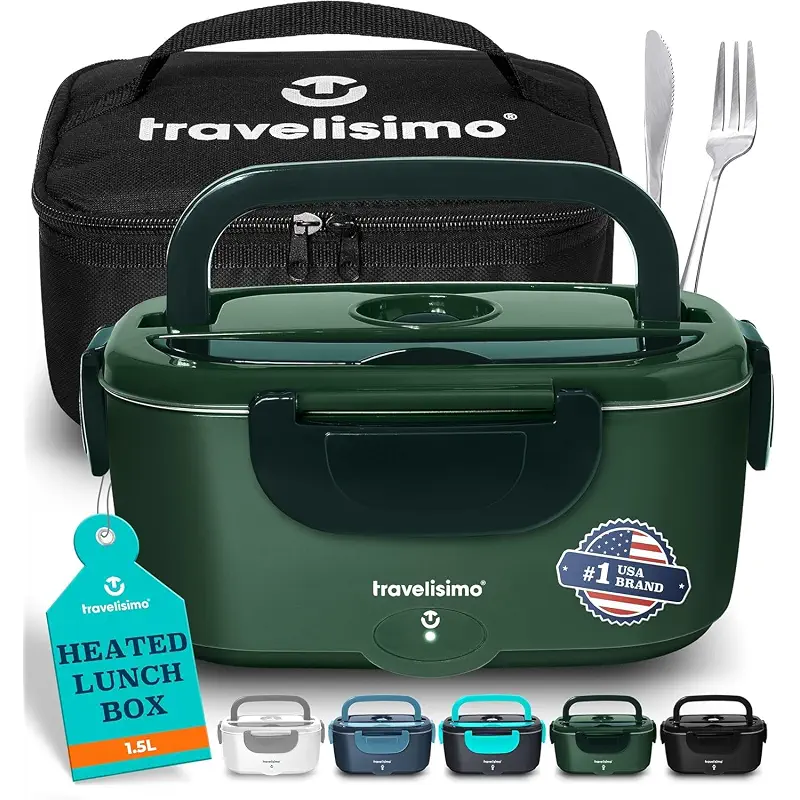
TRAVELISIMO Electric Lunch Box for Adults 100W Heated Lunch Box For Men 1.5L Stainless Steel Portable Food Warmer, 12/24/110V for Travel & Work, Loncheras Electricas Para Calentar almuerzo
4.5(24,676)
Powerful 100W multi-voltage warmer with stainless steel interior, aggressive heating in 20–30 minutes, and large 1.5L capacity.
Ideal for: Office workers and tradespeople who need hot meals in under 30 minutes and don't mind aggressive heating.
Travelisimo's 100W spec puts it among the fastest in this lineup, reaching meal temperature in 20–30 minutes on 110V house power. The stainless steel interior is more durable than plastic-lined competitors and dishwasher safe, removing a friction point for cleanup. The 1.5L capacity is generous enough for a full adult meal plus sides, and the included carrying pouch with a quality zipper adds everyday usability.
One thing to watch: this unit heats very aggressively. Some owners report food actually scorching or overheating if left on longer than 30 minutes on 110V. That's not a flaw: it's actually a feature if you time your meal prep correctly and want guaranteed heat. On 12V from a car, heating is slower and more moderate, which gives you flexibility depending on your power source. The inclusion of tiny utensils is a nice thought but not practical for adult meals; bring your own silverware.
Multi-voltage support (110V/12V/24V) covers most work scenarios. Build quality feels solid, though a few buyers noted the electrical connector is a potential failure point after extended use. The 1-year warranty mitigates early failures. Against the Buddew, the Travelisimo heats just as quickly and has similar durability, but the Buddew's reputation for longevity is slightly stronger due to its larger user base and longer track record. For someone prioritizing fast 110V heating in an office or job-site setting, this unit delivers without compromise.
Pros
100W heating reaches meal temperature in 20–30 minutes
Includes carrying pouch, utensils, and dual power cords
Dishwasher-safe removable container
How to Choose a 12V Food Warmer
Four trade-offs that actually matter when matching a 12v food warmer to your kitchen.
Voltage Options: Where You'll Actually Use It
Start by mapping where you'll plug in. Pure 12V-only models are cheapest but lock you into car outlets and require a power inverter for home use. If you work construction, drive a truck, or spend hours in a vehicle daily, 12V is essential. But if you also want to warm meals at your office desk, 110V matters. Triple-voltage models (110V/12V/24V) cost more upfront but eliminate that compromise. The 24V option is valuable if you drive a truck with 24V batteries; it's often overlooked but essential for that use case. Think through your week: does your meal heating happen mostly in one place, or do you rotate between car, office, and home?
Heating Speed and Power Consumption
Wattage directly correlates with speed. A 100W warmer on 110V reaches temperature in 15–30 minutes. Lower-wattage units (under 70W) take 45 minutes to hours. On 12V car power, even 100W models slow considerably because the voltage drop limits available power. Plan your lunch timing accordingly. If you have a one-hour break and want to eat within minutes of plugging in, a 100W unit is non-negotiable. If you're flexible and can plug in an hour before eating, lower wattage is acceptable and draws less power from your car battery. Higher wattage also risks scorching if you leave it running too long, so you need to be present and attentive.
Container Compatibility and Food Preparation
This determines whether you're buying a warmer or a complete lunch system. Some models require their proprietary stainless steel container, locking you into that shape and capacity. Others accept any flat-bottomed container: glass, plastic, metal, foil trays, even Tupperware. If you meal-prep in glass containers or use take-out foil trays, flexible-container models save money and fit your routine. If you're starting fresh or don't already have containers, built-in models remove decision-making. Test that the warming performance with any container you choose: plastic can warp at high temperatures, glass conducts heat better, and foil distributes heat well. The car 12v food warmers vs. office 110v models comparison shows that office units often heat more aggressively, so container choice matters more in those scenarios.
Durability, Warranty, and Real-World Reliability
Cheap units fail within weeks or months. Better models run for years. Look for reinforced heating modules, robust electrical connectors, and a warranty of at least one year. Multi-thousand-review products show you real-world failure rates; a 4.6-star rating with over 10,000 reviews is vastly more reliable data than 100 reviews. Some manufacturers offer 2-year warranties or free replacement programs, which signal confidence in their build. Ask: do you want a warmer that might fail after a year, or will you get 3+ years of daily use? The latter costs more but saves money and frustration over time. For portable food warmer setup basics, read through the manual or product FAQ to understand whether the unit needs calibration, cleaning, or specific storage instructions before first use.
Portability, Insulation, and Carrying Options
A warmer that stays in your car is different from one you move between work, home, and travel. Weight, handle design, and carrying bag quality matter if you're moving it daily. Collapsible or compact designs pack into backpacks. Carrying bags range from flimsy to surprisingly robust; better ones have sturdy zippers and insulation that protects both the warmer and your hands. Insulation around the exterior reduces heat loss and keeps your car's interior cooler. Check the external temperature: some units get too hot to hold or place on a lap. Lighter, portable models suit commuters who rotate locations; heavier units work fine if they stay in one vehicle.
Frequently asked
Quick answers to the questions readers ask most.
Can I use a portable food warmer to actually cook raw food, or just reheat?
Both, but timing differs dramatically. Reheating cooked leftovers takes 15–45 minutes depending on wattage. Cooking raw protein (chicken, beef) requires 2–3 hours on 12V car power or 1–2 hours on 110V home power. Low-wattage models won't cook raw food in any practical timeframe. If cooking raw meals is your priority, choose a 100W unit on 110V or 24V. Most buyers use these warmers for reheating prepared meals, not cooking from scratch.
Will a 12V food warmer drain my car battery?
Not significantly if the engine is running or the car is on. A typical warmer draws 7–10 amps at 12V. Modern car batteries easily supply that while running. If you leave the warmer on with the engine off for hours, yes, the battery will drain, but it takes several hours for a complete discharge on most vehicles. Avoid running it on a dead battery or for extended periods without the engine on. The low power draw is actually one reason these warmers are safer than power inverter-driven microwaves.
Do I need to pre-thaw frozen meals before using a food warmer?
No, but it helps. Frozen meals take 2–3 times longer than refrigerated ones (often 2–3 hours on 12V). If you have time, thaw your meal in a cooler with an ice pack 30 minutes before plugging in, and heating becomes much faster. If you're in a rush, don't pre-thaw; just expect a longer wait. Frozen meals in sealed containers are safe to heat all day; the warmer won't spoil the food, only make it take longer to reach temperature.
What's the difference between conduction heating and other warming methods?
Conduction heating transfers warmth directly from a metal plate through the container to food, using no steam or moisture. This preserves food texture and flavor better than steam-based warmers, which can dry out leftovers. Most portable warmers use conduction because it's simple, safe, and requires no water or venting. Steam-based or microwave-style warmers tend to be larger and more complex. For lunch-box warmers, conduction is the industry standard and delivers better results.
Is it safe to leave a food warmer plugged in all day at my office?
Yes, once food reaches temperature, the warmer's automatic temperature control keeps it at a safe eating level indefinitely without overcooking. Leaving it on all day uses minimal electricity (similar to a desk lamp). The main risk is forgetting it and leaving it on when unplugged: unlikely but possible. Many office workers routinely leave their warmer plugged in from 10 a.m. to noon or 1 p.m. without issue. That said, unplug it when you leave work to avoid any electrical hazards.